Most water heater emergencies are preventable, and prevention has a season. This calendar breaks the year's maintenance into small, manageable tasks — total time investment is a couple of hours per year, and it prevents the failures that cost thousands.
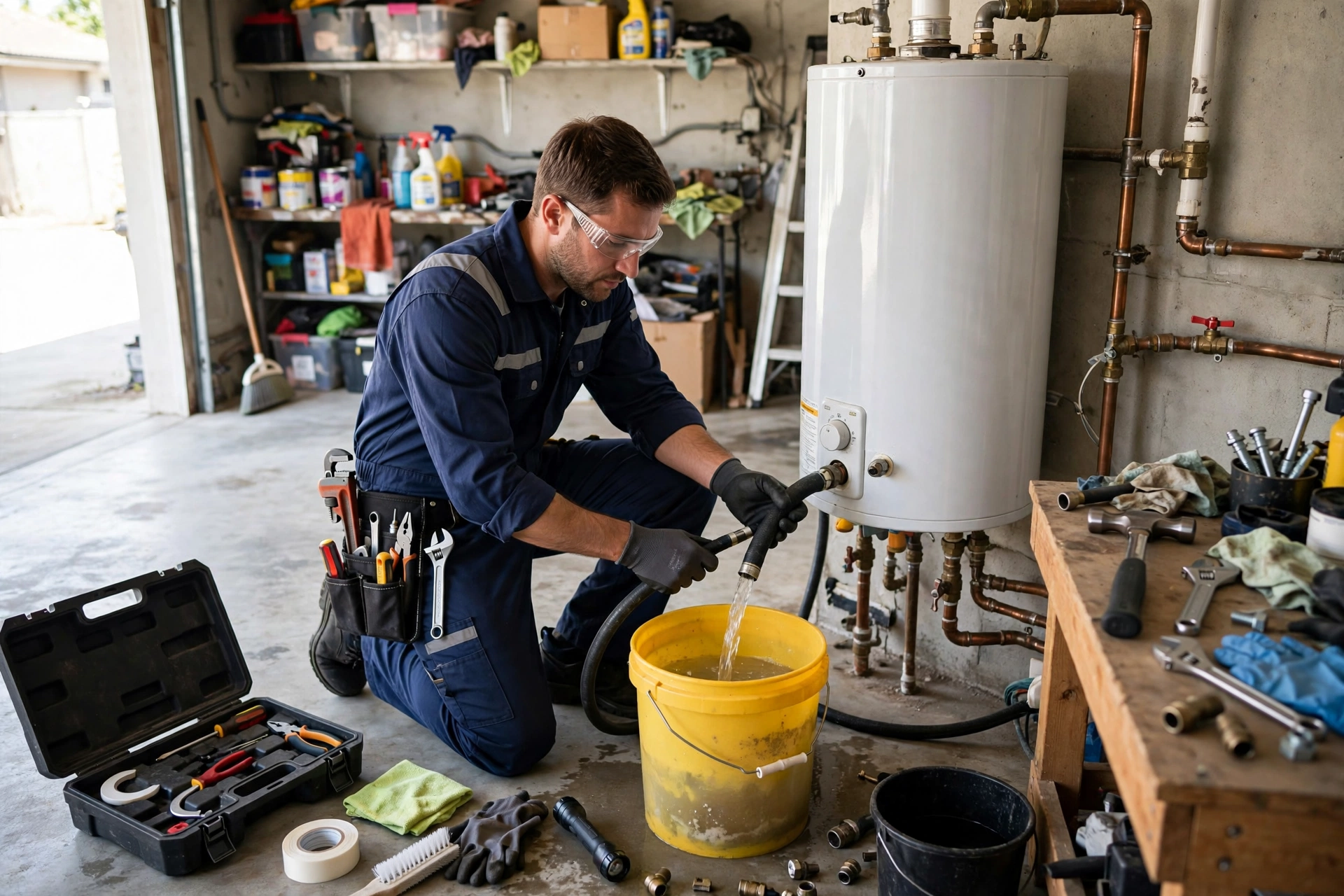
Winter works heaters hardest. In spring: flush sediment that accumulated over heavy-use months, test the T&P valve (lift the lever briefly — water should flow, then stop cleanly), and visually inspect all fittings and the pan. If your anode rod is due for its check (year 3, then every 2), spring is a fine time.
Going away for a week or more? Turn the heater to "vacation" mode or pilot — it saves energy and reduces pressure-cycling wear. Summer is also ideal for any planned replacement: mild weather, no heating-season urgency, easier scheduling, and time to consider upgrades like heat-pump models.
Before heating season: verify the thermostat setting (120°F), check the venting/flue for obstructions (birds love these), insulate exposed hot-water pipes in unconditioned spaces, and confirm the area around a gas heater is clear of stored items — combustion air matters. If your region freezes, know where your main shutoff is before you need it.
In cold snaps, keep the house heated even if you're away (55°F minimum protects pipes and the heater's surroundings), open cabinet doors on exterior walls with plumbing, and let faucets drip during extreme cold. After any freeze event, check the heater area for weeps or drips before they become discoveries.
One pro maintenance visit per year — ideally fall — covers what homeowners shouldn't do themselves: combustion analysis on gas units, electrical checks on electrics, anode rod assessment, and a trained eye on tank condition. It's the cheapest insurance in homeownership.
After winter's heavy demand, spring is ideal for a thorough inspection. Check for any leaks that developed during cold months when thermal stress is highest. Flush the tank to remove sediment accumulated over winter. Test the T&P valve and inspect the anode rod if it's been 2+ years. Spring is also the best time to schedule professional maintenance — plumbers are less busy than in winter emergency season.
Inspect the area around your water heater for signs of winter damage: water stains, rust, or mold that may have developed unnoticed. Check pipe insulation for damage from cold or pests. If your water heater is in an unheated space, verify that freeze protection measures held up.
Summer's lower hot water demand is perfect for efficiency upgrades. Consider lowering the thermostat to 120°F if it's set higher — you'll barely notice the difference in summer but will save energy. Inspect and clean the burner assembly (gas) or check element condition (electric). Summer is also ideal for installing a water heater blanket on older units, as you can work comfortably without rushing.
If you're planning a vacation, set the water heater to "vacation" mode or the lowest setting. There's no need to heat water for an empty house. For extended absences (2+ weeks), consider shutting off the water supply to the water heater entirely as a leak precaution.
Fall preparation prevents winter emergencies. Drain and flush the tank to ensure maximum efficiency for the high-demand season ahead. Test the T&P valve, check the anode rod, and verify the thermostat is set correctly. Inspect gas connections and venting (gas units) before heating season begins.
Ensure the water heater area is protected from freezing if it's in a garage, crawl space, or other unheated area. Check that pipe insulation is intact, seal any drafts, and consider adding a freeze alarm that alerts you if temperatures drop dangerously low. Address any minor issues now — they'll become major problems when the water heater is working hardest in winter.
During winter, monitor your water heater more closely. Listen for unusual sounds that might indicate sediment or component issues. Check for leaks weekly — the combination of high demand and cold ambient temperatures stresses the system. Keep the area around the water heater clear and ensure adequate ventilation (especially for gas units).
If you experience a power outage in winter, know that your water heater will maintain temperature for several hours if undisturbed. Avoid using hot water unnecessarily during outages to preserve the reserve. For gas units with standing pilots, the water heater will continue working without electricity; for electronic ignition models, hot water won't be available until power is restored.
Any water heater problem involving leaks, unusual sounds, or inconsistent hot water warrants prompt attention. Small issues become major failures if ignored. When in doubt, have a professional assess the situation.
Basic maintenance like flushing and visual inspections are DIY-friendly. Repairs involving gas, 240-volt electricity, or the tank itself should be left to licensed professionals for safety and code compliance.
Annual professional maintenance, regular DIY inspections, prompt attention to minor issues, and following manufacturer recommendations are the best prevention. Keep records of all maintenance performed.
