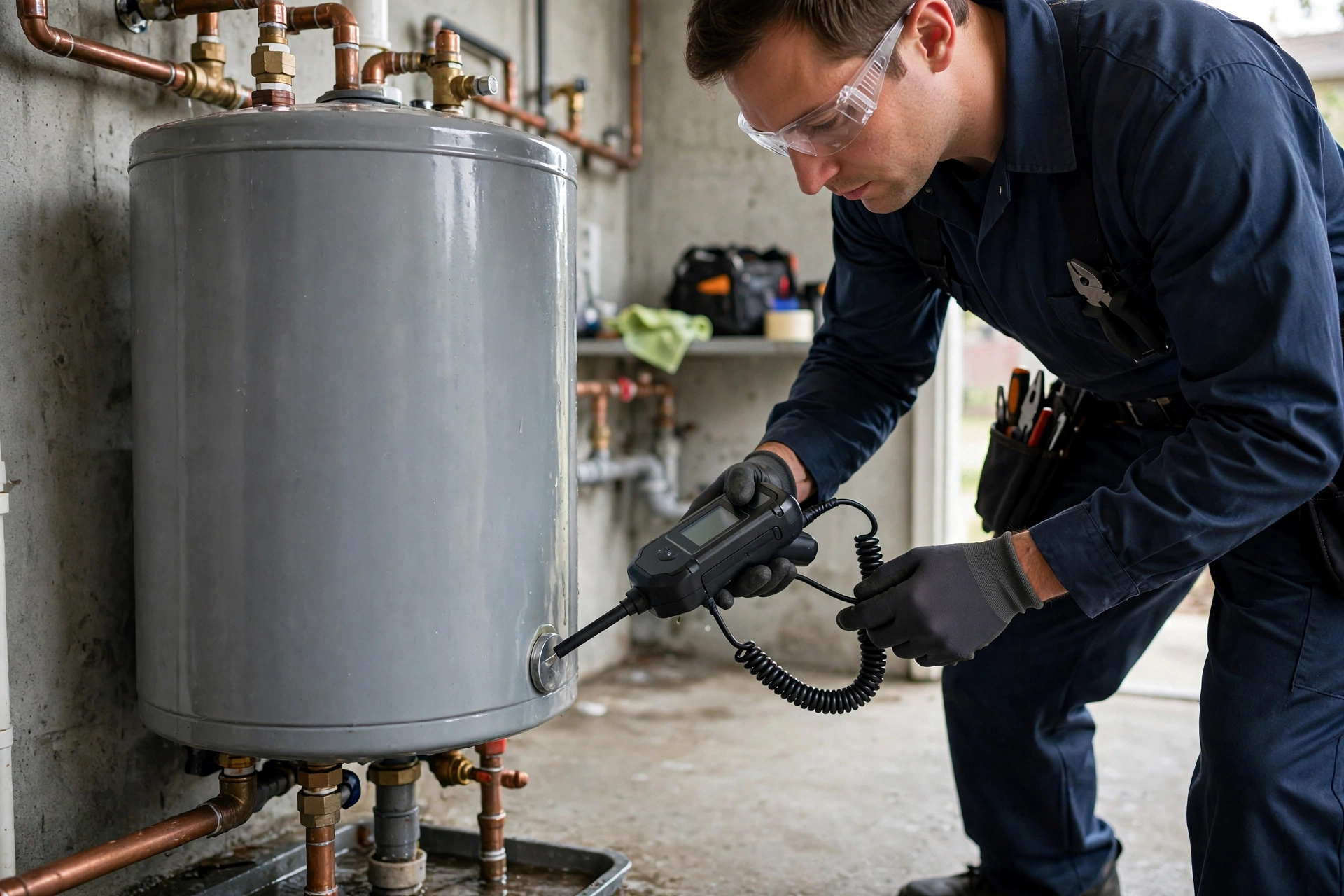
Water heaters talk. Most of what they say is "I have sediment," but different sounds point to different problems — and a few sounds mean act now. Here's a sound-by-sound guide.
The most common noise: sediment trapped under the water layer superheats into steam bubbles that collapse — "kettling." It's the sound of your heater working too hard and your tank bottom overheating. A flush usually quiets it dramatically. Left alone, it accelerates tank fatigue and element failure.
Light hissing during heating can be normal condensation sizzling on a cold tank (common on new installs or in humid spaces). Persistent hissing, especially with moisture around fittings, suggests a small leak flashing to steam — worth a look promptly.
Sharp bangs when water stops — a faucet closing, the washer finishing fill — are pressure shock waves, not the heater itself, but they stress every joint including the heater's. If it's new or worsening, check house water pressure (over 80 PSI is too high) and consider a pressure regulator or expansion tank.
Water dripping onto the hot burner or an element — that's an active leak above the heat source. Don't ignore this one; find the drip's origin.
Often a partially closed valve or a restriction forcing water through a small opening at velocity. Check that the shutoff valves are fully open; if the sound persists, there may be scale narrowing a passage.
Any new loud banging from the tank itself, boiling/kettling sounds with no hot water output, or noise combined with visible leaking or the smell of gas. Noises are symptoms — the fix depends on the cause, which is exactly what a diagnostic visit determines.
The most common water heater noise is rumbling or popping during heating cycles. This occurs when sediment forms a layer on the tank bottom, trapping water underneath. As the burner or element heats the trapped water, it boils and the steam bubbles collapse violently, creating the characteristic rumbling sound.
This isn't just annoying — it's damaging. The overheated tank bottom experiences thermal stress that accelerates metal fatigue. The sediment also insulates the water from the heat source, reducing efficiency by up to 30% and increasing energy costs. Flushing the tank often resolves the noise if caught early.
For severe sediment that won't flush out, professional descaling may help. However, if the tank is old and the rumbling is pronounced, the damage may already be done — start planning for replacement.
Hissing sounds, especially on gas units, can indicate condensation dripping onto the hot burner — common when the tank is recovering from heavy use with cold incoming water. This is usually harmless and stops once the tank reaches temperature. However, persistent hissing may indicate a leak dripping onto hot surfaces.
Inspect for the source: condensation forms on the cold water inlet pipe and tank exterior during recovery; leaks originate from fittings, valves, or the tank itself. If you can't distinguish the source, place paper towels to track moisture origin.
Ticking or tapping sounds as the water heater heats or cools are typically caused by thermal expansion — metal pipes and the tank expanding and contracting. This is normal to some degree, but loud or persistent ticking may indicate loose pipe straps or the tank rubbing against framing.
Secure loose pipes with insulated straps that allow for expansion movement. Ensure the water heater has adequate clearance from walls and that it's sitting level on a stable surface. If the noise is accompanied by pressure fluctuations, check your thermal expansion tank and pressure regulator.
A whining or singing sound, particularly when hot water is running, often indicates restricted flow through a valve or fitting. Partially closed valves, clogged inlet screens, or scale buildup in pipes can create this noise. Check that all valves are fully open and clean any inlet filters.
If the whine comes from the T&P valve, it may be releasing pressure due to thermal expansion or excessive system pressure. This warrants immediate attention — test your water pressure and check the expansion tank.
Any water heater problem involving leaks, unusual sounds, or inconsistent hot water warrants prompt attention. Small issues become major failures if ignored. When in doubt, have a professional assess the situation.
Basic maintenance like flushing and visual inspections are DIY-friendly. Repairs involving gas, 240-volt electricity, or the tank itself should be left to licensed professionals for safety and code compliance.
Annual professional maintenance, regular DIY inspections, prompt attention to minor issues, and following manufacturer recommendations are the best prevention. Keep records of all maintenance performed.
