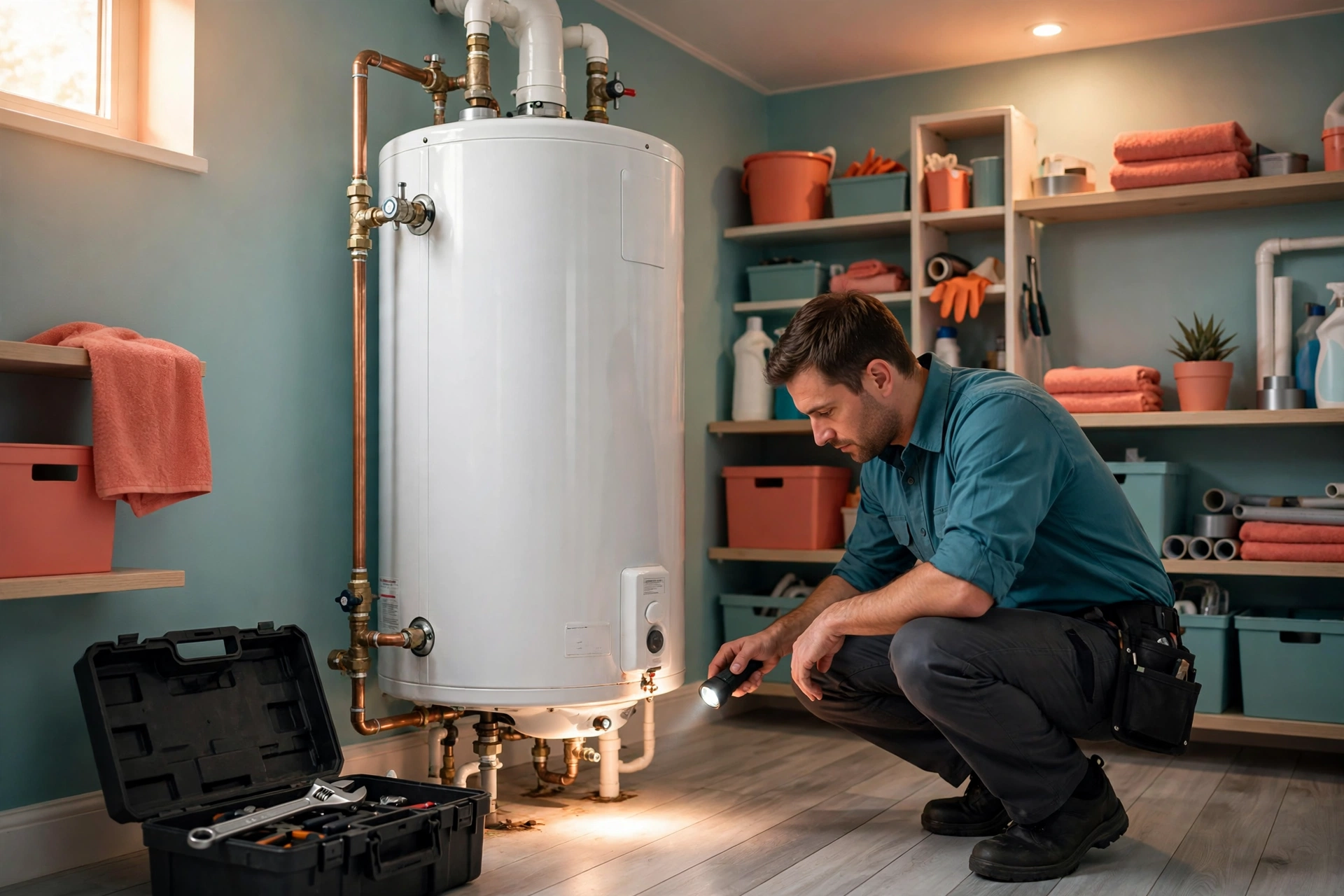
The temperature-and-pressure relief valve is the guardian of your water heater — the device that prevents catastrophic overpressure by venting water when things get dangerous. When it drips, it's communicating. The critical skill is reading the message correctly, because the right response to a working valve differs from the right response to a failed one.
Every tank water heater builds pressure as water heats and expands. The T&P valve is calibrated to open at 150 PSI or 210°F — conditions that should never occur in a healthy system. When it opens, it dumps water through the discharge pipe to relieve the danger. A valve that has discharged has either saved you from an overpressure event or is itself malfunctioning.
1. The valve has failed. Springs weaken, seats corrode, and mineral deposits prevent sealing — especially after 5–10 years. A valve that weeps constantly at normal pressure and temperature has likely just worn out.
2. Thermal expansion with no working expansion tank. In closed plumbing systems, heated water has nowhere to expand. Pressure spikes with every heating cycle, and the T&P valve dutifully vents it — drip by drip, cycle by cycle. This is the most common cause we find.
3. Excessive municipal pressure. If your home's static pressure runs above 80 PSI, the system lives near the valve's threshold. Every heating cycle pushes it over.
First: never cap, plug, or restrict the discharge pipe — that defeats the safety device. Note whether the dripping is constant or only after heating cycles, and check whether the discharge water is extremely hot. Then call (833) 713-2101. We'll test system pressure, check the expansion tank, and determine whether you need a valve replacement, pressure correction, or both.
Replacing the valve without addressing the cause is the most common DIY disappointment — the new valve starts dripping within weeks. Our T&P valve service always includes pressure testing and expansion-tank verification, so the repair solves the problem instead of resetting the countdown.
Treat it as urgent. It signals either dangerous pressure conditions or a failed safety device — both deserve same-week professional attention at minimum.
You can lift the test lever briefly once a year — but be warned: old valves sometimes don't reseat after testing. If yours is 5+ years old, have us test it during a service visit instead.
Because the root cause — usually thermal expansion or high pressure — wasn't addressed. The valve is doing its job; the system needs correction.
Hearing drips from the T&P discharge? Don't ignore a safety device — call now for free triage and same-day service.
Call Now