Is a Water Heater Leak an Emergency?
Published 2026-10-10
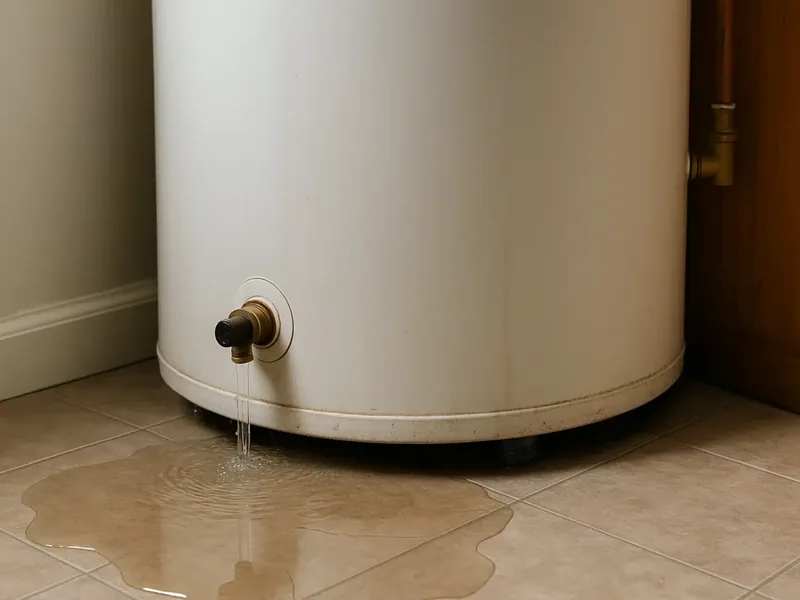
"Is this an emergency?" It's the question behind half the calls we get — and it's a good question, because the answer determines whether you need someone tonight or can schedule calmly next week. Not every water heater leak is a 2 a.m. crisis. But some absolutely are. Here's the honest framework we use when Wheaton homeowners call (833) 713-2101 describing what they see.
Yes, It's an Emergency When…
- Water is actively spreading across the floor faster than towels can manage. A spreading pool means the leak is outpacing evaporation and containment — every hour adds damage.
- A fitting is spraying or a valve has failed open. Pressurized spray soaks walls, ceilings below, and everything nearby in minutes.
- The TPR valve is discharging a steady stream (not a drip — a stream). This signals dangerous temperature or pressure, or a valve stuck open. Shut the unit down.
- The drain valve snapped off or a pipe burst. Full-flow water release; shut off the supply immediately.
- You smell gas around a gas heater. Leave the house, call your gas utility's emergency line, then call us.
- Water has reached electrical components — the breaker panel area, outlets, or the heater's wiring compartments. Shock hazard; kill power at the panel if safe to do so.
- The leak is above a finished space — a heater on an upper floor or over a finished basement multiplies damage per hour.
In any of these cases: shut off the water supply and the power or gas (see our emergency shutoff guide), then call (833) 713-2101 immediately. We dispatch emergencies first, around the clock.
Probably Not an Emergency (But Don't Ignore It) When…
- A slow, occasional drip from a fitting or valve that you've contained with a bucket — stable, not growing.
- Light condensation on the tank in humid weather that dries on its own. (See leak vs. condensation to be sure.)
- A TPR discharge pipe with occasional minor drips — needs diagnosis soon, but a drip is not a discharge.
- Rusty hot water or rumbling with no visible leak — deterioration in progress, not an active emergency. Schedule promptly, though.
- A pilot that won't stay lit with no gas smell — inconvenient, not dangerous. (Unless you smell gas — then it is an emergency.)
The "not an emergency" list still deserves a prompt scheduled visit — days, not weeks. Pressurized systems don't improve with time, and every item above can graduate to the emergency list without much warning.
The Gray Zone: When You're Not Sure
Most real calls live here: "There's water near the heater but I can't tell where it's from." "It drips sometimes." "It's wet but it might be condensation." Our advice: call and describe it. We triage over the phone every day — we'll ask a few questions (where exactly, how much, gas or electric, how old) and tell you honestly whether it needs tonight's dispatch or next week's appointment. We'd rather talk you through a paper-towel test at 9 p.m. than meet your flooded basement at 3 a.m. The call is free; the peace of mind is real.
What Makes Leaks Escalate
Understanding escalation helps you judge urgency. Leaks worsen because: pressure never sleeps — 50–80 PSI works every weak point 24/7; thermal cycling expands and contracts the tank daily, working cracks wider; corrosion accelerates once started, especially in hard water; and failed components cascade — a weeping TPR valve today can stick open or closed tomorrow. The leak you see is the smallest it will ever be. That single fact is why "wait and see" is the most expensive strategy in water heating.
How Our Emergency Response Works
When you call (833) 713-2101 with an active leak: we confirm your address and the situation, talk you through immediate shutoff if you haven't done it, and dispatch the nearest available water heater specialist with an honest arrival window. The technician's first job is always stop the water and make it safe; diagnosis and repair-or-replace options come second. You approve everything before work starts, and we don't leave until the system is tested and the area is as dry as we found it. For the full sequence, read What to Do When Your Water Heater Leaks: First 5 Steps.
Still unsure whether your situation qualifies? Call. That's what the number is for: (833) 713-2101, 24/7 across Wheaton and DuPage County.
Real Calls We've Triaged: Three Examples
"There's a puddle under the heater but it might be from the laundry." We talked the homeowner through the paper-towel test: towels at the heater base soaked within two hours while the laundry area stayed dry. Verdict: active tank-base weep — not gushing, but a tank-shell leak. Scheduled next-morning replacement; the tank held overnight with the water off. Good outcome from a calm triage call.
"Water is spraying from the top of the heater." Verdict: immediate emergency. We walked them through shutting the inlet valve and the breaker while dispatching. A failed supply-line fitting — fixed same visit, no tank replacement needed. The fast shutoff saved the finished basement.
"The TPR pipe drips a few times a day." Verdict: prompt but not emergency. Scheduled within two days; diagnosis showed a failed expansion tank spiking pressure (see our expansion tank guide). New expansion tank, problem solved — and the TPR valve itself was fine.
The pattern: a two-minute phone description gets you the right priority every time. Don't self-triage in silence — call (833) 713-2101 and let us do it with you.
Whether a water heater leak counts as an emergency depends on three things: how much water, where it's going, and what's nearby. In Wheaton, the "where" often decides it, because finished basements are everywhere — the ranch and colonial homes that make up so much of the housing stock frequently have finished lower levels with carpet, drywall, and furniture sitting exactly where a failed tank sends its 40 or 50 gallons. Water spreading across a finished basement doesn't wait for business hours, and every hour of delay is more material that has to be torn out.
The "what's nearby" question matters most with gas heaters. Water pooling around a gas burner assembly is an immediate shut-everything-down situation: kill the gas at the yellow-handled valve and the water at the inlet, and don't try to relight anything until the area is dry and the unit has been checked. In winter there's an added Wheaton wrinkle — a leak in an under-heated basement or crawlspace area during a January cold snap can freeze as it spreads, complicating both cleanup and repair.
Leaks That Can Wait Until Morning
Not every drip is a disaster. A slow weep from a supply fitting, an occasional drip from the drain valve into a properly drained pan, or light summertime condensation on a cold tank in a humid basement are all "contain and call in the morning" situations. The test is simple: put a bucket or towel under it, check back in an hour, and see whether the situation is stable. If the water is contained, nothing electrical is getting wet, and the leak isn't growing, you've bought yourself the night.
Whatever the hour, give the dispatcher useful facts: gas or electric, where the tank sits (basement, and finished or unfinished), whether you've shut off the water and the fuel, and where the water is going. That thirty seconds of information determines whether you get same-night emergency service or first call in the morning — and it lets the technician roll up with the right parts instead of making two trips across DuPage County.