Water Heater Replacement in Wheaton, IL
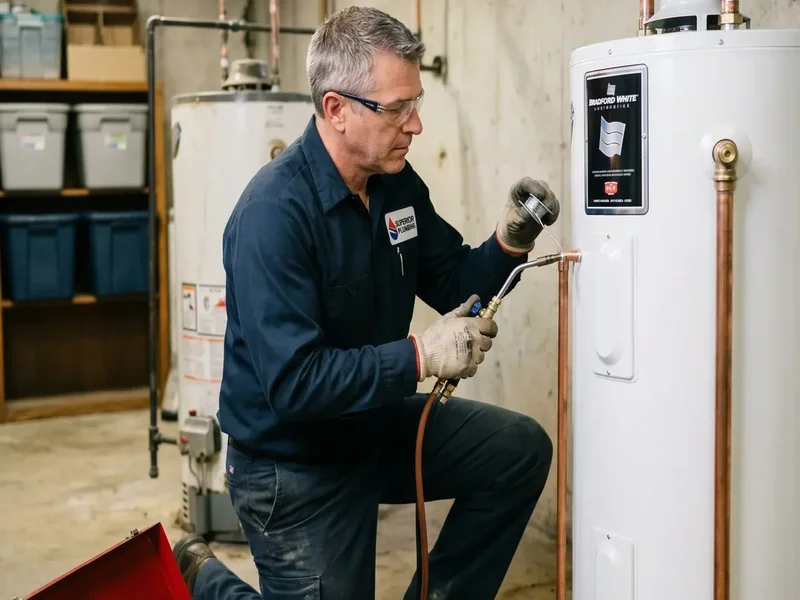
When Replacement Is the Right Call
Water heaters do not last forever, and there comes a point where another repair is throwing good money after bad. Replacement is the right call when the tank body itself is leaking — corroded steel cannot be patched reliably. It is also the right call when the heater is past 12 to 15 years old and facing a major component failure, when rust-colored hot water signals internal corrosion, when sediment has hardened beyond flushing, or when the unit has become unreliable enough that you are planning your showers around it.
Replacement is also an opportunity: to correct venting deficiencies, add a drain pan, install an expansion tank, upsize capacity for a growing household, or switch fuel types or technologies (tank to tankless, for example). A replacement done right leaves you with a safer, more efficient installation than the one that came out.
Signs Your Water Heater Needs Replacement
- Water leaking from the tank body, base, or seams — the definitive end-of-life sign
- Rust-colored hot water (with clear cold water) indicating internal tank corrosion
- Age past 12 years with declining performance
- Rumbling that flushing cannot resolve — hardened sediment
- Repeated component failures in short succession
- Rising energy bills tied to the heater working harder
- Visible corrosion on the tank jacket, base, or connections
- A heater that cannot keep up with household demand it once handled
- Moisture or rust around the anode port suggesting the tank is unprotected
Our Replacement Process, Step by Step
1. Assessment and sizing
We evaluate your household's hot-water demand — occupants, bathrooms, simultaneous uses like showers plus laundry — and the existing fuel type, venting, and space. Sizing is not guesswork: an undersized tank runs out, an oversized one wastes energy. We also discuss tank versus tankless where it makes sense for your home.
2. Selection
We recommend a replacement unit matched to your demand, fuel, venting, and space — standard atmospheric-vent gas, power-vent gas, electric, or tankless. We explain the practical differences (recovery rate, venting requirements, operating cost profile) so you choose with eyes open.
3. Safe removal
Water and energy are shut off, the tank is drained to a floor drain or sump pit, gas or electrical disconnected safely, venting detached, and the old unit removed without damage to floors and walls. We haul the old heater away.
4. Installation
The new unit is set — on a new drain pan, which we include as standard. Water connections are made with dielectric unions where dissimilar metals meet, the TPR valve is installed with proper discharge piping, gas lines are reconnected with gas-rated sealant (or the electrical circuit verified for electric units), and venting is connected and checked for proper draft.
5. Code compliance
Every installation meets Illinois plumbing code and the City of Wheaton's requirements: proper venting, TPR discharge termination, combustion air for gas units, expansion tank where the system is closed, and seismic strapping where applicable. Permit requirements are handled as part of the job.
6. Startup and verification
We fill the tank completely (purging air), verify no leaks at any joint, relight or energize, run full heating cycles, leak-test every gas connection with solution, verify vent draft, confirm the TPR valve functions, and check outlet temperature at a tap. We walk you through the new unit's operation and maintenance — including the anode rod and flushing schedule that will protect your investment.
Equipment and Materials
Replacement day runs on the new heater itself — stocked in common residential sizes for gas and electric so most replacements happen same-day — plus drain pans, dielectric unions, supply connectors, TPR valves and discharge piping, gas-rated sealant, venting components, expansion tanks, pipe wrenches, tubing tools, torch or press fittings, dollies and lifting equipment, hoses, and combustion/draft testing gear. We arrive ready to complete the job, not to make a parts run.
Safety and Precautions
Replacement concentrates every water heater hazard into one job: a drained tank that still weighs over a hundred pounds, gas disconnection and reconnection, 240-volt electrical work on electric units, and venting that must draft correctly to prevent carbon-monoxide spillage. We never leave gas joints untested, never energize an electric unit before confirming a full tank, and never reuse a questionable vent connector. The TPR discharge is piped to code on every install — no exceptions for "it was like that before." Old tanks are drained fully before moving; dragging a partially full tank damages floors and risks a spill of rusty sediment water. Homeowners should keep the area clear on installation day and keep children and pets away from the work zone.
Local Factors: Wheaton and DuPage County
Wheaton's replacement market is dominated by aging mid-century tanks — 15- to 20-year-old units are common, and many replacements we do are emergency swaps after a tank lets go. If your heater is in that age range, planning the replacement on your schedule beats planning it around a flood. The area's finished basements make the drain pan and water alarm conversation essential on every replacement; the incremental cost during installation is trivial compared to the damage a future leak could do to finished space.
Venting deserves attention in Wheaton's older homes: many original installations have vent connectors and chimney conditions that met the code of their era but not today's. Replacement is the moment to correct deteriorated venting, verify proper draft, and confirm adequate combustion air — particularly in basements that have been finished around the heater, enclosing it in tighter spaces. Winter installation timing matters too: we protect your home from the cold during the swap and verify the new unit fires and drafts correctly in real winter conditions. The City of Wheaton requires permits for water heater replacements with inspection, and our installations are done to pass — correct venting, TPR discharge, expansion control, and documentation.