Water Heater Pan Installation in Wheaton, IL
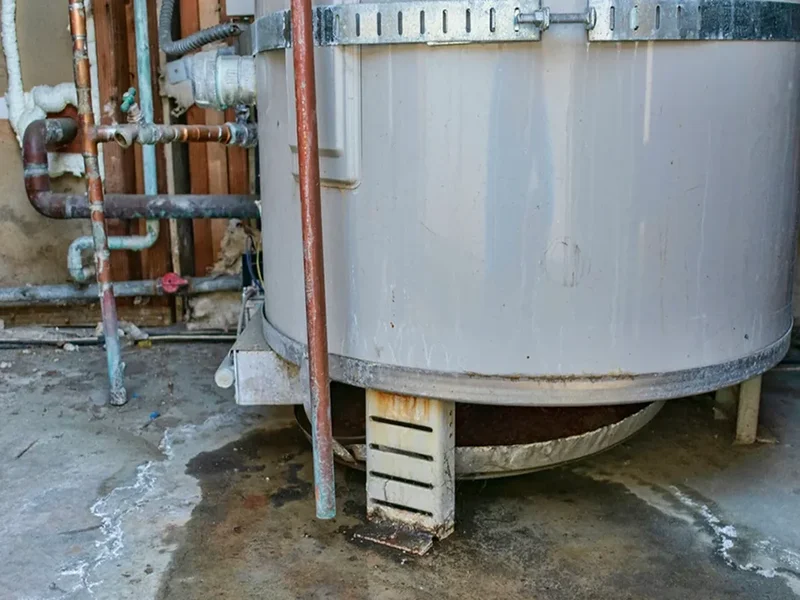
What a Water Heater Pan Does
A water heater pan is a shallow, watertight tray that sits under the tank — typically 2 to 4 inches deep and a few inches wider than the heater on all sides — with a drain line piped to an approved location. Its job is unglamorous and invaluable: when the tank seeps, a fitting drips, or the TPR valve discharges, the pan catches the water and routes it to a drain instead of letting it spread across your floor. It does not prevent leaks. It prevents leaks from becoming floods.
Pans are inexpensive, code-required in many installations (any location where a leak would cause damage), and the single highest-value protection you can add to a water heater — especially one sitting over finished space.
Signs You Need a Pan Installed
- Your water heater sits in or above finished living space — a finished basement, a first-floor closet, an attic, or an upper floor
- You have found unexplained dampness or staining around the heater base
- You are replacing the water heater — the pan goes in while the old tank is out
- Your current "pan" is cracked, rusted through, undersized, or has no drain line
- The heater sits on a wood subfloor or near stored valuables, electronics, or the furnace
- An inspector or insurance review flagged the missing pan
- You want a leak alarm — pans pair perfectly with water sensors
The replacement moment is the ideal time: installing a pan under an existing heater requires lifting the full tank, while during a replacement the pan simply goes in first. If your heater is being replaced, always add the pan then.
Common Pan Problems We Fix
Missing pans are the most common issue — the heater was installed directly on the floor decades ago and nobody added one. Undersized pans that do not extend beyond the tank footprint catch nothing from a side-seam leak. Cracked plastic pans and rusted-through metal pans fail silently until the day they are needed. The most common defect of all is a pan with no drain: a pan without a drain line just becomes a shallow pool that overflows, delaying the flood by hours rather than preventing it. Improper drain routing — to nowhere, uphill, or into a wall cavity — is depressingly common in older installs.
Our Pan Installation Process, Step by Step
1. Site assessment
We measure the heater footprint and the available space, identify the drain destination (floor drain, sump pit, laundry tub, or exterior — whichever is practical and code-compliant), and check clearances for the drain line route.
2. Pan selection
We size the pan to the tank — typically 2 inches wider than the heater diameter all around — in durable plastic or aluminum. Plastic resists corrosion indefinitely; aluminum handles heat better. Either is fine for residential use when properly drained.
3. Placement
On new installations and replacements, the pan goes in before the new tank is set — clean and simple. For retrofits under an existing heater, we drain the tank, disconnect it, lift it onto the pan, and reconnect — essentially a partial reinstallation, which is why retrofit pan installs are often combined with other service.
4. Drain line installation
We pipe the pan drain with proper downward pitch to the approved destination, using corrosion-resistant material. The drain terminates where water can go without causing damage — never into a wall cavity, never uphill, never capped.
5. Leak alarm (recommended)
We recommend placing a battery-powered water alarm in the pan. The pan contains the leak; the alarm tells you it is happening. Together they turn a potential disaster into a maintenance call.
6. Verification
We pour water into the pan and confirm it drains freely to the destination with no pooling, then run the heater and recheck all connections disturbed during the work.
Equipment and Materials
Pan installations need the pan itself in the correct size, drain-line piping and fittings, a tubing cutter, drill with hole saws for routing the drain line, pipe straps and hangers, sealant, and — for retrofits — the full drain-down and lifting equipment used in heater service. We carry battery-powered water alarms to pair with the installation.
Safety and Precautions
Retrofit pan installation means moving a water heater, and a drained 50-gallon tank still weighs well over 100 pounds — we lift with proper equipment and never drag a tank across a pan's edge, which cracks the pan being installed. Gas and water connections disturbed during a retrofit are remade and tested exactly as in a replacement: gas joints leak-tested, TPR discharge verified, tank confirmed full before electric elements are energized. The drain line must never be confused with the TPR discharge — they are separate systems with separate routing requirements, and we keep them distinct. Homeowners should know that a pan is damage control, not leak prevention: it buys time and contains water, but a leaking tank still needs replacement.
Local Factors: Wheaton and DuPage County
In Wheaton, the pan conversation is really a finished-basement conversation. So many DuPage County homes have converted their basements into living space — family rooms, offices, guest suites — with the water heater still sitting in a utility corner on the bare floor. A tank leak in that setting does not just wet concrete; it soaks carpet, drywall, and furniture. If your heater shares space with anything finished, a drained pan is not optional in any practical sense.
Many Wheaton basements lack a floor drain near the heater, which is why we plan the drain route carefully — sump pits are the most common destination locally, and most homes have one. Where no gravity drain exists, we discuss the options honestly rather than installing a drainless pan and calling it protection. Illinois plumbing code requires pans with drains where leakage would cause damage, and the City of Wheaton enforces this on replacements and new installs — every heater replacement we do gets a pan as a matter of course. Pairing the pan with a water alarm is especially worthwhile here given how many heaters sit in basements that are not visited daily; the alarm is what turns containment into early warning.