Anode Rod Replacement in Wheaton, IL
What the Anode Rod Does
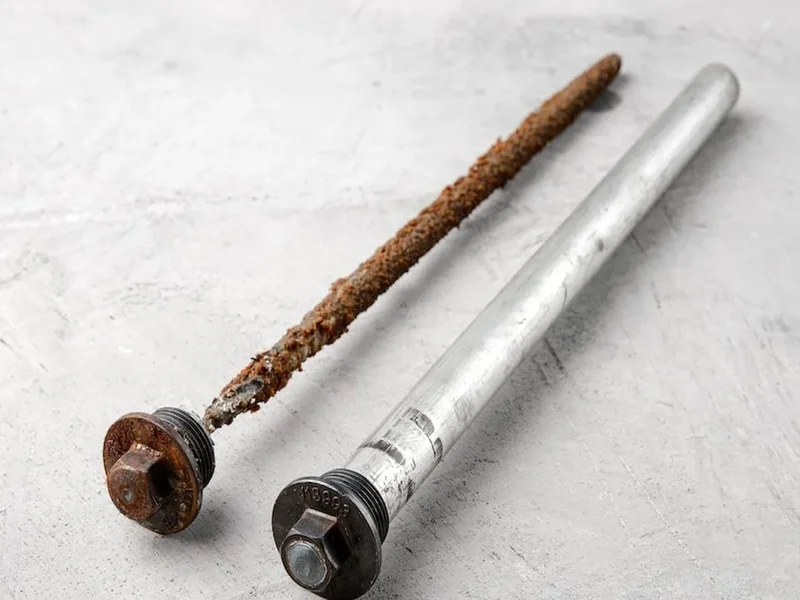
Inside every tank water heater is a long metal rod — usually magnesium or aluminum — threaded into the top of the tank and hanging down into the water. This is the sacrificial anode rod, and it is the reason your steel tank does not rust through in a few years. Through galvanic corrosion, the rod corrodes preferentially, sacrificing itself so the tank's steel stays intact. The glass lining inside the tank has microscopic flaws; the anode protects exactly those spots.
The catch: the rod is consumed in the process. Once it is gone, the tank itself becomes the sacrificial metal, and corrosion begins in earnest. Replacing the anode rod on schedule is the single most effective maintenance you can do to extend a tank water heater's life — more impactful than flushing, and far cheaper than a new tank.
Signs Your Anode Rod Needs Replacement
- Rotten-egg (sulfur) smell in the hot water — bacteria reacting with a depleted magnesium anode is the classic cause
- Hot water that is discolored or has a metallic taste while cold water runs clear
- A rod inspection showing the core wire exposed or the rod reduced to a thin stub
- A water heater past 5 years old that has never had the anode checked
- Rust streaks or weeping around the anode hex head on top of the tank
- Increasing sediment and rumbling despite regular flushing
- You are already servicing the tank (drain valve, TPR, elements) and the rod's age is unknown
The sulfur smell deserves a special note: it is not always a bad anode. Sometimes switching from magnesium to an aluminum-zinc alloy rod, or to a powered anode, resolves odor caused by sulfate-reducing bacteria. We diagnose the odor source rather than just swapping parts.
How Anode Rods Fail
Anode rods do not "break" — they dissolve. In aggressive water they can be consumed in as little as two to three years; in gentler water they may last five or more. Water softeners accelerate anode consumption significantly because softened water is more conductive and corrosive to the rod — a softened home may need rod checks twice as often. Once the rod's sacrificial metal is gone, only a thin steel core wire remains, offering no protection. From that point, tank corrosion accelerates, sediment-related damage worsens, and the clock starts ticking toward a tank leak.
Our Anode Rod Replacement Process, Step by Step
1. Inspection and rod selection
We check the heater's age, water conditions (including whether you have a softener), and any odor complaints. Magnesium rods offer the strongest protection; aluminum-zinc rods resist odor better; powered (impressed-current) anodes never need replacement and suit problem-odor situations. We recommend based on your water, not on what is on the truck.
2. Isolation
Cold-water inlet off, energy off. We relieve pressure through a hot tap and confirm the TPR valve functions.
3. Partial drain-down
The tank is drained a few gallons — just below the top — so removing the rod does not spill water across the top of the heater. On tanks with the anode under a plastic cap or combined with the hot-water outlet nipple, we expose it first.
4. Extraction
The old rod is unthreaded with a socket and breaker bar. Severely corroded rods can seize; we use penetrating techniques and controlled force — never enough to damage the tank tapping. If overhead clearance is tight (low basement ceilings are common), we cut the old rod for removal and install a segmented/flexible replacement rod that bends into place.
5. Installation
The new rod is threaded in with Teflon tape, torqued properly, and the tank refilled with air purged through the hot taps. We verify the tank is full before re-energizing electric elements.
6. Verification
We run a heat cycle, check the anode port for seepage, and confirm normal operation. For odor complaints, we explain the timeline: bacterial odor typically fades over days to weeks as the new rod changes the tank chemistry.
Equipment and Materials
We stock magnesium, aluminum-zinc, and segmented anode rods in standard lengths, plus powered anode units for chronic odor cases. Tools include a 1-1/16" socket with breaker bar, impact wrench for seized rods, Teflon tape and pipe dope, hoses for partial draining, and thread-cleaning tools. Because anode service pairs naturally with flushing, we carry flush hoses and can combine both services in one visit.
Safety and Precautions
Anode replacement is low-drama work, but the fundamentals still apply: energy off before opening the tank, pressure relieved before unthreading, and the tank confirmed full before electric elements are re-energized. The main DIY pitfall is the seized rod — applying excessive force with a cheater bar can twist the tank tapping or crack the tank top, turning maintenance into replacement. Low-clearance installations need segmented rods; forcing a rigid rod in a tight space damages the tank lining. We also never leave a tank without anode protection "to see how it does" — an unprotected tank begins corroding immediately.
Local Factors: Wheaton and DuPage County
Two local factors make anode service especially relevant in Wheaton. First, water softeners are common in DuPage County homes, and softened water consumes anode rods much faster than unsoftened water. If you have a softener and have never thought about your anode rod, it is very likely overdue — this is the single most common missed maintenance we find locally. Second, the area's mid-century housing stock means many heaters are on their original rod from installation a decade or more ago; at that point there is usually nothing left but the core wire.
Sulfur odor complaints come in waves from certain neighborhoods, often tied to well-water pockets or municipal supply variations, and the fix is usually an aluminum-zinc or powered anode rather than a new heater — a much smaller job than most homeowners fear. Clearance is a practical local issue too: many Wheaton basement installations sit under low ceilings or ductwork with inches to spare above the heater, which is exactly why we stock segmented rods that install in tight spaces without moving the tank. As with all tank service in Wheaton, we work to Illinois plumbing code requirements, and if the inspection reveals the tank itself is already failing, we will tell you before you spend money protecting a tank that needs replacement.