Water Heater Leak Detection in Wheaton, IL
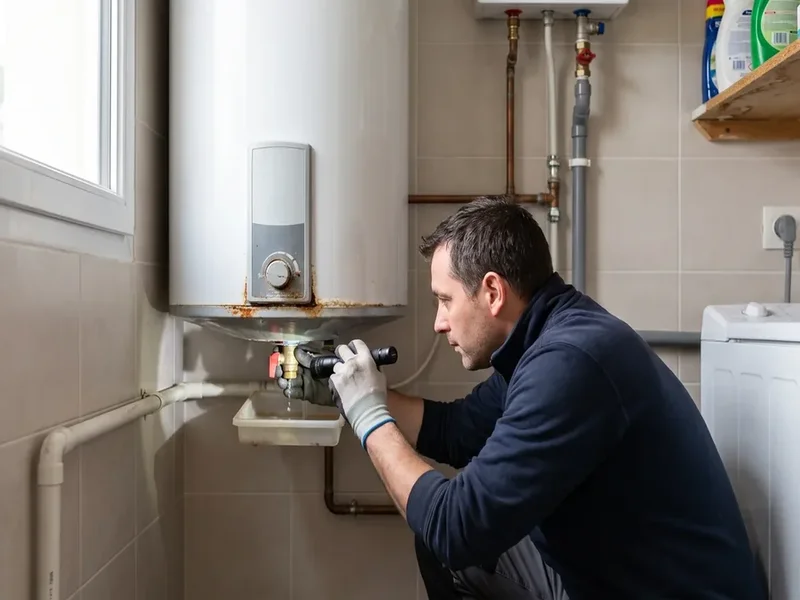
What Water Heater Leak Detection Means
Leak detection for water heaters is the systematic process of finding where water is coming from — and whether it is coming from the heater at all. A surprising number of "water heater leaks" turn out to be condensation, a nearby plumbing leak, a washing machine hose, groundwater seepage, or a TPR discharge from pressure issues rather than a failed tank. Accurate detection matters because the fix for a tank leak (replacement) and the fix for a fitting leak (a part) are very different jobs with very different costs. Guessing wrong wastes your money either way.
Detection also covers the leaks you cannot see: slow seeps inside the jacket, pinholes that only weep under heating pressure, and moisture wicking into walls and floors around the installation. Finding these early is the difference between a scheduled replacement and an emergency flood.
Signs You May Have a Hidden Leak
- A musty smell near the water heater with no visible water
- Unexplained dampness on the floor that returns after drying
- Rust streaks on the tank jacket with no active drip visible
- Paint bubbling or drywall softening on walls near the heater
- A water bill that has crept up with no change in usage
- The sound of running water when nothing is using hot water
- Warm spots on the floor around the heater (on slab installations)
- Mineral crust or white/green deposits at joints — the footprint of a leak that dries between episodes
- Your water meter's leak indicator moving with all fixtures off
Common Sources We Find
Tank-body seepage from corroded steel is the most serious find — pinholes at the tank floor or seams that weep only when the tank is hot and pressurized. Fitting leaks at the inlet/outlet nipples, dielectric unions, and supply lines are the most common overall. TPR valve discharge from thermal expansion or high pressure masquerades as a tank leak regularly. Condensation is the great impostor: in humid basements, cold water entering a tank causes the exterior to sweat, producing puddles that look exactly like a leak — especially in summer. Nearby sources include washing machine hoses, water softener discharge, sump pump check-valve seepage, and foundation seepage that pools at the low point where the heater happens to sit.
Our Leak Detection Process, Step by Step
1. Interview and history
We ask when the moisture appears, whether it correlates with hot-water use or weather, the heater's age and service history, and what you have already observed. Patterns in your answers often narrow the search before we touch a tool.
2. Visual and tactile inspection
With the area dried, we inspect every joint, the tank jacket, the base, the TPR discharge, the drain valve, and the surrounding floor and walls with a bright light — feeling for moisture at each connection and looking for mineral trails, rust, and staining that mark intermittent leaks.
3. Moisture metering
We use pin and pinless moisture meters on the floor, walls, and the tank jacket insulation to map moisture that eyes cannot see, distinguishing active wetting from old stains.
4. Pressurized observation
With tissue or dry cloth at each suspect joint, we watch through a full heating cycle — many leaks only appear as the tank heats and pressurizes, then vanish as it cools. This step catches the intermittent leakers.
5. System checks
We check household water pressure at a hose bib, test for thermal expansion, verify the TPR valve, and check the water meter's leak indicator with fixtures off to determine whether water is being lost somewhere in the system at all.
6. Source identification and reporting
We show you what we found — the actual source, documented — and lay out the fix options: repair the fitting, replace the valve, add an expansion tank, replace the heater, or address the non-heater source we identified. No leak, no sale: if it is condensation, we tell you that and explain how to confirm it yourself.
Equipment and Materials
Detection is a diagnostic service, so the toolkit is diagnostic: high-intensity inspection lights, pin and pinless moisture meters, infrared thermometer for tracing warm-water paths, water pressure gauge, tissue and dye tablets for tracing, inspection mirror and borescope for seeing behind and under the unit, and a wet vacuum for drying the area to establish a clean baseline. Repair parts ride along so that when detection finds a failed fitting or valve, the fix can happen the same visit.
Safety and Precautions
Detection work around a water heater means working around hot surfaces, electrical connections, and gas lines — we treat every inspection with the same precautions as a repair. We never recommend leak-sealant additives poured into the tank; they clog fixtures and valves while masking the failure. If moisture has reached electrical components, outlets, or the breaker panel area, we stop and address the electrical hazard before continuing the water investigation. And when detection reveals a tank-body leak, we are direct about it: the tank needs replacement, and delaying risks the sudden failure that detection was meant to prevent.
Local Factors: Wheaton and DuPage County
Wheaton basements create the perfect conditions for ambiguous moisture. Summer humidity condenses on cold-water piping and tank jackets, producing "leaks" that are pure condensation — we see this every summer, and part of our detection job is ruling it out before anyone spends money. Spring brings the opposite: foundation seepage and sump-pump discharge issues that pool water exactly where the heater sits, framing the heater for the foundation's crime. Knowing the seasonal pattern helps us read the evidence correctly.
The area's aging tank population means detection often ends at tank replacement — many Wheaton heaters are 12 to 18 years old, and a confirmed tank-body seep on a unit that age is a replacement decision, not a repair. Thermal-expansion-related TPR discharge is also common locally due to closed plumbing systems with pressure-reducing valves; the "leak" that only appears after showers is frequently the relief valve doing its job against expansion pressure, and the fix is an expansion tank, not a new heater. Finally, many Wheaton utility areas are cramped — heaters boxed in by the furnace, softener, and laundry — which is why we carry borescopes: seeing behind the tank without moving it often reveals the leak's true story.