Gas Control Valve Replacement in Wheaton, IL
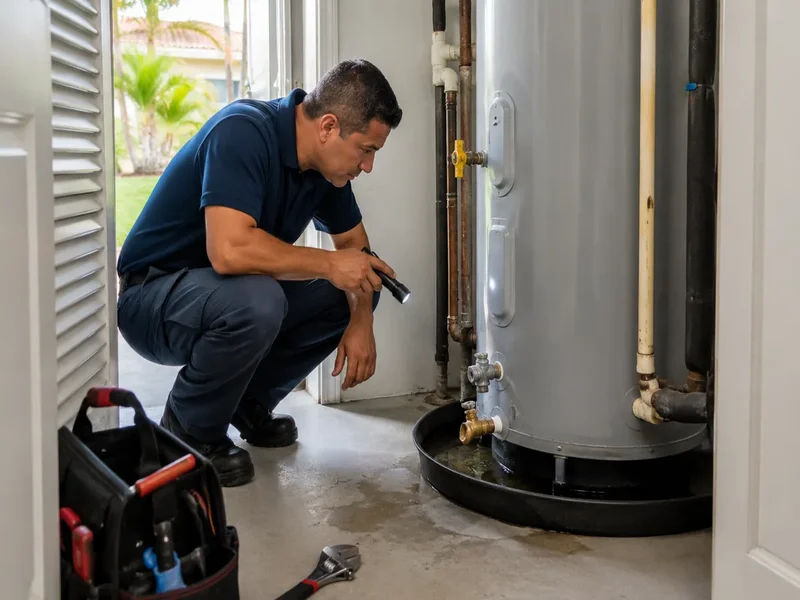
What the Gas Control Valve Does
On a gas water heater, the gas control valve is the brain of the operation — a single assembly at the bottom front of the tank that combines the thermostat, the gas regulator, the pilot and thermocouple connections, and the safety shutoff. It senses water temperature, opens the gas flow to the burner when heat is needed, shuts it down at the set temperature, and cuts gas entirely if the pilot goes out. When any part of this assembly fails, the heater either will not heat or will not heat safely, and the repair is replacement of the whole valve.
Gas control valves are sealed, calibrated assemblies — they are never repaired in the field, only replaced. This is gas safety work, and it belongs to a professional.
Signs Your Gas Control Valve Needs Replacement
- The pilot lights but will not stay lit, even with a new thermocouple
- The pilot stays lit but the main burner never fires
- No hot water despite gas supply being on and the pilot lit
- Water overheating beyond the thermostat setting — the valve not shutting the burner down
- A strong gas smell near the valve (shut the gas off and call immediately)
- The control knob is stuck, stripped, or will not turn to the correct positions
- Visible damage, corrosion, or melted components on the valve body
- Repeated "no hot water" episodes that temporarily resolve and return
Common Causes of Gas Control Valve Failure
Internal thermostat failure is the most common — the sensing element drifts or sticks, so the valve misreads tank temperature. The gas regulator section wears with age and cycling. Thermocouple-circuit issues mimic valve failure (a weak thermocouple drops out and the valve's safety shuts the gas), which is why we test the thermocouple before condemning the valve. Contamination in the gas line, moisture, and corrosion attack the valve internals over years. Physical damage from impact or over-tightened connections cracks the body. And simple age: gas controls on 10- to 15-year-old heaters have cycled tens of thousands of times and owe nothing.
Our Gas Control Valve Replacement Process, Step by Step
1. Diagnosis
We verify gas supply to the unit, test the thermocouple and pilot assembly, and confirm the valve — not the thermocouple, gas supply, or venting — is the failure. Replacing a valve when the thermocouple was the $15 problem is a mistake we do not make.
2. Gas isolation
The gas shutoff valve to the heater is closed and the line verified depressurized. We confirm no gas smell before proceeding and ventilate the area.
3. Drain-down
The tank is drained below the valve level, since the valve threads directly into the tank. We confirm the TPR valve opens for venting.
4. Valve replacement
The gas line union is broken, the pilot tube and thermocouple disconnected, and the old valve unthreaded from the tank. The new valve — matched to the heater's BTU rating and fuel type — is installed with gas-rated pipe dope on the tank threads and gas connections. Pilot assembly and thermocouple are reconnected or replaced as needed.
5. Leak testing
Gas is restored and every disturbed joint is tested with leak-detection solution — no exceptions, no shortcuts. We also verify the gas pressure is correct for the valve.
6. Relight and operational verification
We relight the pilot, verify it holds, fire the burner, and confirm it shuts down at the set temperature through full cycles. Draft at the vent hood is checked, the TPR valve confirmed functional, and outlet temperature verified at a tap.
Equipment and Materials
We stock gas control valves for the major residential heater brands and BTU ratings, thermocouples and pilot assemblies (replaced alongside when worn), gas-rated pipe dope and Teflon tape, leak-detection solution, manometers for gas-pressure verification, pipe wrenches, tubing tools for pilot lines, hoses for draining, and combustion/draft testing equipment. Arriving with the valve on the truck is what makes this a single-visit repair.
Safety and Precautions
Gas work has zero tolerance for error. We shut off gas before breaking any connection, test every joint with solution after reassembly, and never leave a gas valve replacement without a full operational test including shutdown at temperature. If you smell gas at any point — during our work or on your own — do not operate switches or phones near the area; leave and call from a safe distance. Homeowners should never attempt gas valve replacement themselves: beyond the obvious explosion and carbon-monoxide risks, an incorrectly installed valve can overfire the burner, overheat the tank, or leak gas slowly into the home. We also verify venting and combustion air on every gas control job, because a new valve on a heater with a blocked flue is still a carbon-monoxide hazard.
Local Factors: Wheaton and DuPage County
Wheaton is overwhelmingly a natural-gas water heater market, and the gas controls we replace are most often on mid-century tanks in basement utility areas — installations where the valve has been cycling since the heater was installed 12 to 18 years ago. These valves tend to fail in winter, when the burner runs its longest cycles against cold incoming water; the "pilot lit, burner won't fire" call is a January classic.
Older Wheaton installations sometimes have the gas shutoff valve seized or the gas piping run in ways that complicate valve access — we carry the fittings to address supply-side issues discovered during the job. Combustion air is a real local concern in finished basements: heaters tucked into closets or walled-off utility rooms may not have the combustion air the code requires, and any gas control replacement is the right moment to verify it meets Illinois fuel-gas code. The City of Wheaton requires permits for gas control valve replacements, and we handle the work to code with proper documentation. If the tank itself is also near end of life, we will give you the honest math on valve replacement versus full heater replacement before you spend the money.