Water Heater Pan Installation in Geneva, IL 60134
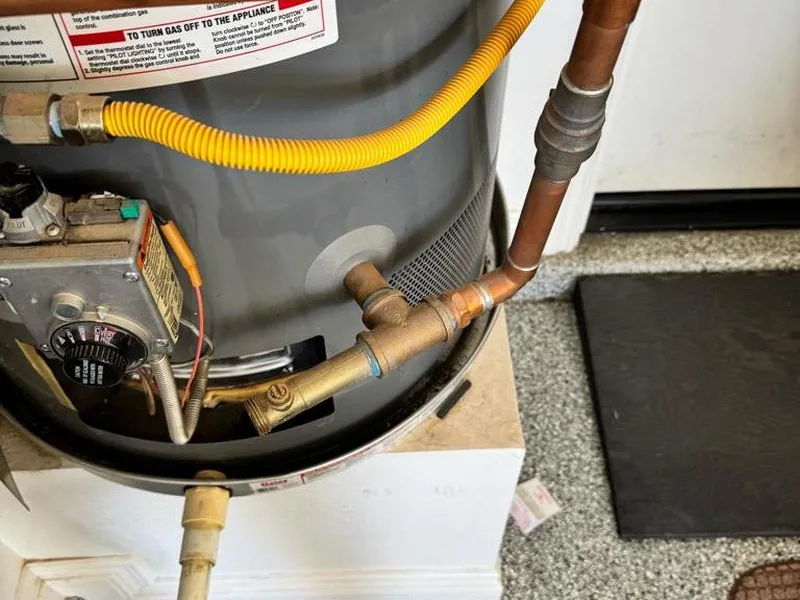
IN SHORT: When the water heater in Geneva, IL 60134 has no drain pan beneath it, a single tank failure can flood the surrounding area. First step: look under the tank for a pan with a drain line, then call (833) 713-2101 to schedule installation.
Water Heater Pan Problem Signs and Causes in Geneva
In Geneva, a drain pan protects two very different kinds of basements. The historic district's finished lower levels sit in homes where old framing and plaster wick water quickly once it spreads, and many of these homes have no modern floor drain. The newer subdivisions have floor drains and sump pits but builder-grade tanks that will age on schedule. In both cases the logic is identical: the tank will eventually leak, and a pan with a drain line decides whether that leak is a cleanup or a construction project.
Walk through this checklist at your water heater; any yes means a pan belongs there:
- Does the tank sit directly on the floor? Then the first leak goes wherever it wants.
- Is the old pan rusted, cracked, or undersized? Then it protects nothing.
- Does the pan lack a drain line? Then it merely postpones the overflow.
- Is there finished space below or beside the heater? Then an uncontained leak is expensive.
- Are there stains around the tank base? Then the tank has already warned you once.
- Is a new tank on the way? Then the pan goes in with it, at minimal added labor.
- Did an inspector flag it? Then it is already a documented deficiency.
Understanding what actually goes wrong with tanks explains why the pan matters:
- Slow bottom leaks. Tanks overwhelmingly fail by weeping from the corroded bottom, a failure mode a drained pan handles for as long as it takes you to notice.
- Relief valve events. When the T and P valve lifts, it discharges hot water under pressure; routed over the pan, that discharge drains away harmlessly.
- Seeping connections. Pipe joints, the drain valve, and the anode port can all develop slow drips that the pan intercepts.
- Sweating tanks. In damp basements, condensation forms on the cold tank and runs down; the pan keeps it off the floor.
- Sudden failures. Uncommon, but when a tank lets go all at once, a pan still channels water toward the drain instead of across the room.
Our Water Heater Pan Installation Process in Geneva
Routing note for Geneva: historic homes without floor drains usually route the pan line to the sump pit or to daylight through the foundation wall. In newer subdivisions we use the existing floor drain or laundry standpipe, keeping the run sloped and secured.
- Plan the drain route. Tank diameter is measured, the pan size is confirmed, and the path to the nearest floor drain, sump, or exterior exit is mapped.
- Secure the heater. The water inlet is closed and the energy source, electric breaker or gas valve, is shut off.
- Lighten the tank. After relieving pressure, the tank is partially drained so it can be lifted safely.
- Free the connections. Supply lines are disconnected to allow the lift.
- Position the pan. The tank is lifted, the pan is set underneath and leveled, and the tank is lowered into it, centered with clearance all around.
- Plumb the drain. PVC pipe connects the pan outlet to the drain destination, sloped continuously downward and fastened out of the way.
- Reconnect the water. Lines are reattached, the tank fills, and the system is checked for drips at every joint.
- Commission the protection. The heater is restarted, the pan drain is flow-tested with a poured bucket of water, and a leak alarm is set in the pan.
Equipment and Materials We Use
A proper pan installation uses straightforward, durable materials:
- Drain pan sized to the tank. High-impact plastic or aluminum, wider than the tank diameter by a couple of inches all around. Plastic resists corrosion; aluminum resists heat and impact.
- PVC drain pipe and fittings. Typically 3/4-inch or 1-inch PVC with elbows as needed, run with continuous downward slope to the drain destination.
- Pan drain adapter. The threaded fitting that connects the pan's outlet to the PVC line, sealed against leaks.
- Water leak alarm. A battery-powered sensor that sits in the pan and sounds when water collects, giving early warning of a tank leak or blocked drain.
- Shims. For leveling the pan so water flows to the drain connection instead of pooling.
- Heater stand, where needed. In flood-prone spots, elevating the heater on a stand above routine high-water marks, with the pan underneath.
Local Factors for Pan Installation in Geneva, IL 60134
Historic Geneva homes are where pans prevent the worst damage. A tank leak in a Victorian with finished lower levels does not sit politely on concrete; it wicks into old framing, plaster, and flooring within hours. Many of these homes lack floor drains entirely, a legacy of their era, so pan installation here usually means routing a new PVC line to the sump pit or to daylight along the foundation. The work takes some creativity in stone-wall basements, but the protection is worth it precisely because these homes are the hardest to dry out afterward.
In the newer subdivisions, pan installation is straightforward and the argument is purely about timing. Builder-grade tanks have predictable service lives, and a pan installed now guards the basement through the high-risk final years. Floor drains and sump pits are standard in this construction, so the drain line has an obvious destination. For Geneva homeowners in either era of housing, the pan also catches T and P relief discharge, which we route to terminate over the pan during installation.
For Geneva's historic homes, the pan installation is also the moment to correct the T and P relief discharge routing, which in century-old installations often terminates somewhere unhelpful. We route it over the pan during the visit, so relief events drain away instead of hitting the floor. Test the pan drain each fall: pour water in, confirm it reaches the sump or daylight freely, and check the alarm. In newer subdivisions, add the pan check to the same seasonal routine as the furnace filter. Where the drain runs to daylight, walk the exterior termination after the first freeze to confirm it stays clear.
What to Expect During Your Visit in Geneva
When you call (833) 713-2101 from Geneva, we will ask the tank diameter and whether the home has a floor drain, sump, or neither, which sets the drain plan for historic versus newer construction. On arrival, the technician confirms the route, shuts down and lightens the tank, sets the leveled pan, and runs the sloped PVC line. The drain is flow-tested, the relief line is corrected to terminate over the pan where needed, and an alarm is installed. Clearing access to the heater beforehand is the only preparation.
Frequently Asked Questions
Water Heater Leaking? Don't Wait.
Call now for fast service in Wheaton and surrounding areas.