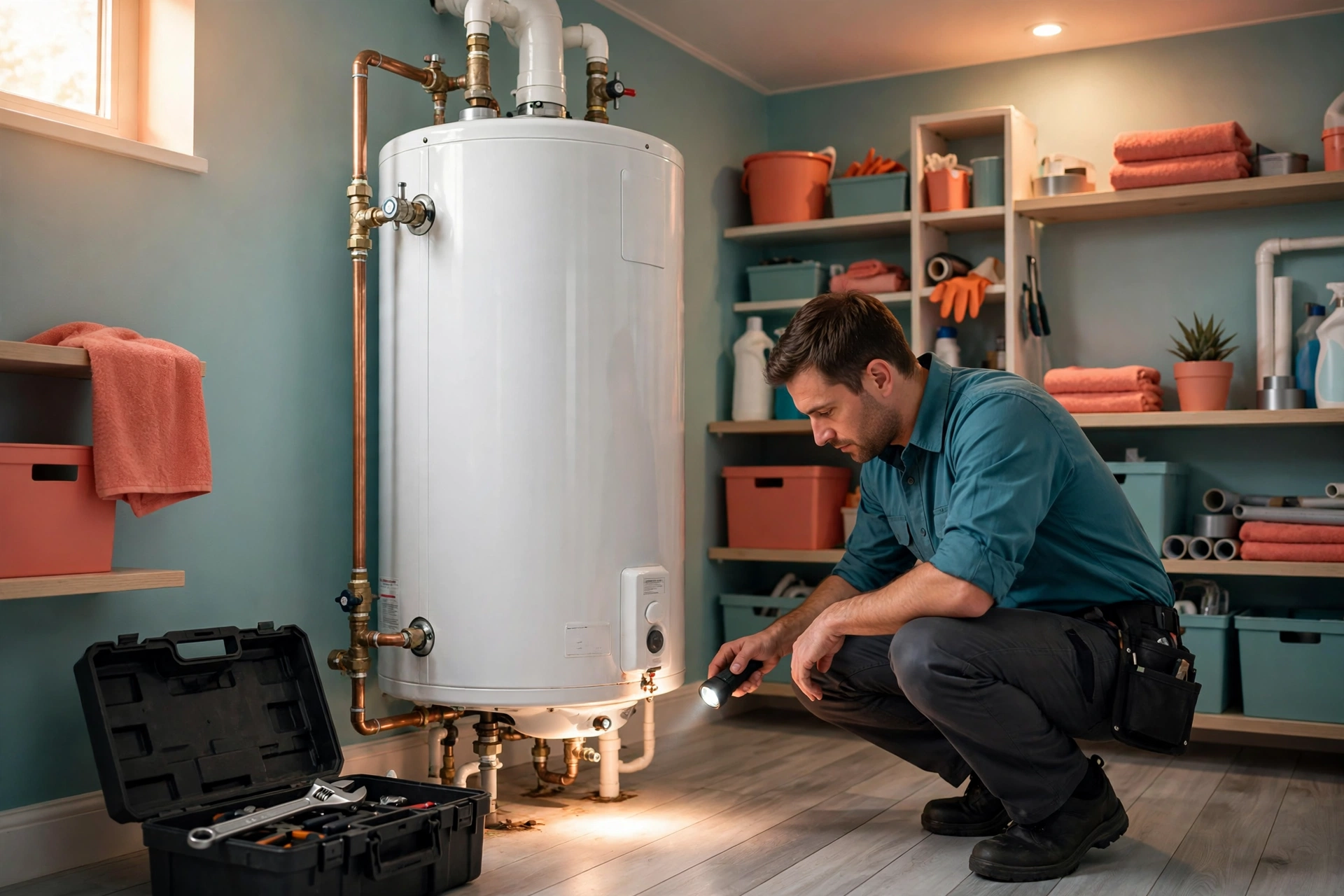
Here's an industry secret: the vast majority of water heater failures are preventable. Sediment, depleted anodes, unchecked pressure, and untested valves cause nearly every premature leak we repair — and every one of them is addressable in a single annual visit. This is the exact checklist our technicians work through.
Drain several gallons — ideally a full flush — until the water runs clear. In our moderately hard water, annual flushing prevents the sediment layer that overheats tank bottoms and kills lower elements. Tankless units need a descaling flush with the manufacturer's procedure instead.
Every 2–3 years, check the anode's remaining thickness. Under half an inch or heavily coated with calcium means replacement time. This $200–$400 service is the highest-ROI item on the list — it's literally what stands between corrosion and your tank wall.
Lift the test lever briefly and confirm water flows, then releases cleanly and reseats without dripping. A valve that won't reseat needs replacement — a 5-minute test that verifies your primary safety device.
Static pressure should read under 80 PSI; the expansion tank should hold its air charge. High pressure silently stresses every seal and is the hidden cause behind many 'mystery' T&P drips.
Look for weeping at the drain valve, dielectric unions, and inlet/outlet connections. Check the drain pan for standing water and confirm the leak sensor (if installed) is working. Catching a weep now prevents a rupture later.
Confirm 120°F delivery at the tap and check the draft hood and venting for proper draft. Combustion safety is non-negotiable on gas heaters.
Homeowners can handle visual inspections and temperature checks. Flushing, anode service, pressure diagnostics, and anything involving gas belong to professionals — both for safety and because we spot the subtle warning signs that untrained eyes miss. Our annual maintenance visit covers the full checklist in about an hour: call (833) 713-2101 to schedule.
Our diagnostic visit is $89–$149; a full annual maintenance service (flush, anode check, valve tests, pressure check, condition report) is quoted transparently before we begin.
Sediment bakes on, the anode depletes, and pressure issues go unnoticed — the classic recipe for a tank failing at year 8 instead of year 14. It's never too late to start, though.
A modified version: annual descaling replaces flushing, plus condensate system checks, venting inspection, and error-code review.
Ready to put your heater on a real maintenance schedule? One annual visit covers the full checklist — call to enroll.
Call Now