Anode Rod Replacement: When and Why
Published 2026-10-10
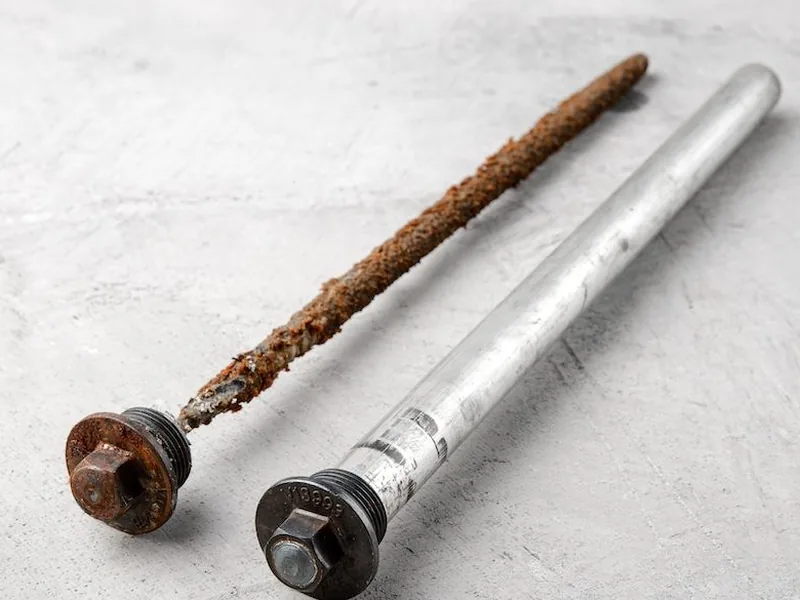
Inside every tank water heater is a humble metal rod doing a heroic job: corroding on purpose so your tank doesn't have to. It's called the anode rod — or sacrificial anode — and in Wheaton's moderately hard water, it's the hardest-working part of your heater. Understanding when to replace it is the closest thing to a cheat code for water heater longevity.
What the Anode Rod Actually Does
Steel tanks rust when water, oxygen, and steel meet — which is always, inside a water heater. Manufacturers fight this two ways: a glass lining baked onto the steel, and the anode rod. The rod is made of magnesium, aluminum, or a zinc-aluminum alloy — metals that corrode more readily than steel. Through a bit of electrochemistry, the rod "attracts" the corrosion reaction to itself, sacrificing its own metal to protect the tank walls. As long as rod metal remains, the tank is protected. When the rod is consumed down to its steel core wire, the tank starts corroding instead — and the clock starts ticking toward a leak.
How Long Anode Rods Last in Wheaton
In soft water, a rod might last 5–7 years. In Wheaton's harder Lake Michigan supply, 3–5 years is more realistic — and water softeners, while great for the tank overall, can actually consume magnesium rods faster. There's no dashboard light for this; the rod dies silently while the tank looks fine from outside. That's why the replacement interval is calendar-based, not symptom-based. If your heater is over five years old and the rod has never been checked, assume it's gone.
Signs Your Anode Rod Is Spent
- Rotten-egg smell in hot water only. Sulfate-reducing bacteria react with a depleted magnesium rod to produce hydrogen sulfide. (Cold water smelling fine while hot water stinks is the classic pattern.) A zinc-aluminum replacement rod usually solves it.
- The tank is 5+ years old with no rod service. At Wheaton water hardness, the math says it's consumed.
- Rusty hot water appearing. This can mean the rod is gone and tank corrosion has begun — have the tank assessed promptly.
- A physical inspection shows a thin rod. A healthy rod is thick with visible metal; a spent one is a skinny wire, sometimes coated in calcium.
What Replacement Involves
The rod screws into the top of the tank — sometimes under a plastic cap, sometimes integrated into the hot-water outlet nipple. Replacement means shutting off water and power/gas, relieving pressure, unscrewing the old rod, and threading in the new one with proper sealant. Sounds simple, but there are real gotchas: rods seize in place after years of heat cycling and may need serious leverage; low basement ceilings may not clear a full-length rigid rod (flexible segmented rods solve this); and disturbing a very old, never-serviced tank can occasionally reveal that the tank was already depending on borrowed time. Our anode rod replacement service handles all of this — including the judgment call about whether the tank is worth investing in.
Choosing the Right Rod
- Magnesium: the best protector in most water, and the standard choice. Consumed fastest in softened water.
- Aluminum/zinc-aluminum: longer-lasting, and the zinc content fights the sulfur bacteria behind rotten-egg odor. Slightly less protective than magnesium.
- Powered (impressed-current) rods: use a small electrical current instead of sacrificial metal — they don't get consumed, so they last decades. Higher upfront cost, excellent for homes that eat standard rods quickly.
For most Wheaton homes, magnesium is the default unless odor issues point to aluminum/zinc. A powered rod is worth considering if you've replaced standard rods unusually often.
The Economics: Cheapest Life Extension There Is
An anode rod replacement costs a small fraction of a new water heater and can add years to a mid-life tank. It's the highest-return maintenance in water heating — full stop. The catch is timing: it protects tanks that still have integrity. If the tank is already leaking from the shell or the water runs rusty, a new rod is closing the barn door after the horse left; what you need is our guide to deciding between repair and replacement.
Not sure where your rod stands? Call Water Heater Leak Repair Rescue at (833) 713-2101. We'll check the rod, assess the tank's overall condition, and tell you straight whether a replacement rod is money well spent — or whether that money belongs toward a new heater.
How Often Wheaton Homeowners Should Check the Rod
Set a calendar reminder, not a symptom watch. For Wheaton's water, inspect the anode rod every 2–3 years and expect replacement every 3–5. Homes with water softeners should check on the shorter end of that range, since softened water consumes magnesium rods faster. The check itself is quick for a professional: shut down the unit, pull the rod, and eyeball how much sacrificial metal remains. If more than about half the diameter is gone — or the rod is coated in hard calcium — replace it. Pair the rod check with your annual flush and TPR test, and your tank gets a proper physical every year. It's a small habit that pays for itself many times over in extra tank life, and it's exactly the kind of thing our anode rod service in Wheaton covers in a single visit.
Wheaton's drinking water comes from Lake Michigan through the DuPage Water Commission — clean, well-treated, and moderately hard at roughly 7.5 to 10 grains per gallon. That hardness is low enough that most homeowners never think about it, but the dissolved minerals plus the chlorine and chloramines used for disinfection steadily consume sacrificial anode rods. In practice, a magnesium rod in a Wheaton tank heater lasts about 3 to 5 years, noticeably shorter than the 5-to-6-year figure you'll see in national guides written for softer-water regions.
The other local accelerator is the water softener. Softeners are common in Wheaton — in neighborhoods like Briarwood and the Danada area, most homes built from the 1970s onward have one tucked next to the heater. Softened water is gentler on fixtures and the tank shell, but it dissolves magnesium anode rods faster. If your home has a softener, inspect the rod every two years instead of three, and consider an aluminum/zinc alloy or powered rod if you're burning through magnesium rods ahead of schedule.
What a Rod Check Looks Like in a Wheaton Basement
Most Wheaton heaters live in basements, and in the older homes near downtown — the Cape Cods and bungalows from the 1940s and 50s — basement ceilings can be too low for a standard 44-inch rod to clear the top of the tank. That's exactly what segmented flexible rods are made for. A proper check means shutting off the water and the power or gas, relieving pressure through the TPR valve, and pulling the rod to see how much sacrificial metal remains. If it's worn down to a thin wire or caked in hard calcium, it gets replaced on the spot.
One Wheaton-specific clue that your rod needs attention is a rotten-egg smell in the hot water only. Sulfate-reducing bacteria react with magnesium rods to produce hydrogen sulfide, and it shows up more in homes where the heater sits unused for long stretches — for instance, houses whose owners spend winters elsewhere. Swapping to an aluminum/zinc alloy rod usually ends the smell. If the cold water smells too, though, the problem is in the supply itself rather than the heater, and that's a different conversation entirely.