Repair or Replace? How to Decide
Published 2026-10-10
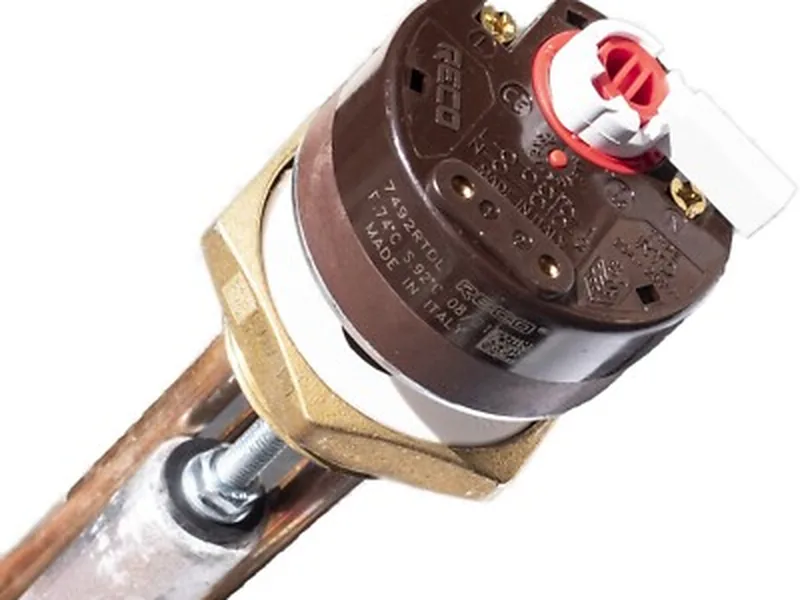
The tank is leaking — or failing — and you're facing the classic fork in the road: repair it or replace it? It's the highest-stakes routine decision in water heating, because the wrong choice wastes real money either way: repairing a dying tank buys months at repair prices, while replacing a fixable heater spends replacement money unnecessarily. Here's the decision framework we use on every Wheaton service call.
First: Identify What Kind of Problem You Have
Everything flows from this distinction:
- Component problem: the leak or failure is in a replaceable part — drain valve, TPR valve, fitting, element, thermostat, gas valve, anode port. The tank shell is sound.
- Tank problem: the steel shell itself is compromised — base/sidewall/seam weeps, widespread internal corrosion, rusty water from a depleted system. No part replacement fixes the vessel.
Tank problems mean replacement — full stop, no framework needed. A corroded pressure vessel can't be patched safely, and anyone offering to try is selling you risk. The framework below is for component problems and aging-but-sound tanks.
The Three Factors: Age, Condition, Cost Ratio
1. Age — where is the tank in its life?
Against a typical 8–12 year tank life in Illinois conditions: under ~6 years with a component failure → repair, almost always. 6–10 years → the judgment zone (see below). Over ~10 years → replacement deserves serious consideration for anything beyond a trivial part, because the tank's remaining life is short regardless. Check the manufacture date on the rating plate — don't guess. Our lifespan guide details how Wheaton's water and winters set these brackets.
2. Condition — what shape is the whole unit in?
Age is a proxy; condition is the truth. During any service visit, assess: rust on the jacket or fittings, water quality (clear vs. rusty hot water), sediment severity (noise? drain flow?), anode rod state, and whether multiple components are failing simultaneously. A 9-year-old tank that's been flushed annually with a fresh rod is a better repair candidate than a 7-year-old tank that's never been touched and rumbles like a freight train. Multiple simultaneous failures on an old tank = the unit is retiring; don't finance its farewell tour one part at (833) 713-2101 visit at a time.
3. Cost ratio — the 50% guideline
Compare the repair estimate against replacement cost. As a rule of thumb: if the repair approaches half the cost of replacement and the tank is past roughly three-quarters of expected life, replacement is usually smarter money. A modest valve or thermostat on a mid-life tank? Repair. A gas control valve plus labor on a 12-year-old tank? That money belongs toward the new unit. This isn't a law — it's a tiebreaker for the judgment zone.
The Judgment Zone (6–10 Years): Deciding Questions
When the framework doesn't give a clean answer, ask:
- Has it been maintained? Flushed, rod replaced — yes means the tank likely has real remaining life; repair leans smarter.
- Is this the first problem or the third? First failure in 8 years is normal wear; third failure in 18 months is a pattern.
- What's the household's timeline? Selling in a year? A clean repair may be rational. Staying a decade? Replacement's economics improve.
- How's the efficiency? Older tanks are less efficient; replacement can meaningfully cut the energy waste that's been inflating bills — factor it in.
- Can you afford the risk? Repairing an old tank is a bet it holds; if a surprise failure in 6 months would be a crisis, replacement buys certainty.
Special Cases
- Tankless units: longer lifespans shift the brackets — component repairs make sense deeper into the unit's life, but heat-exchanger failure on an older unit usually means replacement. See tankless leak causes.
- Repeat TPR discharge: if the "problem" is expansion pressure, neither repair nor replacement of the heater is the answer — it's an expansion tank issue. Diagnose before deciding.
- Flood damage to controls: a gas valve or electrical system compromised by flooding often pushes toward replacement on safety grounds even when the tank is young.
- Code compliance: very old installations may need venting, pan, or expansion upgrades at replacement time — factor that scope into the replacement side honestly.
How We Advise It (Our Promise)
When our technician diagnoses your unit, you'll get three things: the finding (what's wrong, with evidence you can see), the options (repair scope and replacement alternative, each with the reasoning), and a recommendation (what we'd do if it were our house, and why). No pressure, no same-day-expiring discounts, no scary stories. If repair is smart, we say repair. If the tank is done, we say so plainly and explain the evidence. The decision stays yours — our job is making it an informed one.
Facing the decision right now? Call Water Heater Leak Repair Rescue at (833) 713-2101. We'll assess your tank's real age and condition, lay out both paths with honest numbers, and help you choose — across Wheaton and DuPage County, 24/7 for emergencies.
Every Wheaton homeowner with an aging heater eventually faces the same fork: repair the thing or replace it. Age draws the first line. Under 8 years old, repair is almost always right — the tank has life left, and a thermocouple, element, thermostat, or TPR valve is a parts-level fix. From 8 to 10, it's case by case: a cheap part on a well-maintained tank still favors repair, while the second failure in a year suggests the cascade has started. Past 10 to 12 years, replacement is usually the rational choice, because you're buying a working part on a tank that's statistically near the end — and the tank failure that follows doesn't care what you just spent.
The nature of the failure draws the second line, and it's absolute: a leaking tank shell is never repaired. Patching, sealing, or epoxying a tank body is at best a brief delay and at worst a burst waiting for a bad moment — replacement is the only fix. Everything else — controls, valves, elements, thermostats, anode rods — is repairable in principle, which is where the age math takes over. Efficiency draws the third line: a 15-year-old heater at 0.58 energy factor versus a modern 0.64-plus unit, running against Wheaton's cold winter inlet water, shows up on the gas bill every month.
What Replacement Involves in Wheaton
A replacement here isn't just a swap; it's a code-compliance event. The City of Wheaton requires a permit for water heater replacement, and the installation must meet the current Illinois Plumbing Code — which usually means adding what the old heater predates: an expansion tank for the closed system, a drain pan where the heater sits over finished space, proper TPR discharge piping, and verified venting on gas units. Sizing deserves a fresh look too: households grow, teenagers take longer showers, and the 40-gallon unit that served a couple may be undersized for a family of five facing 40-degree January inlet water.
Repair still wins plenty of these decisions — a failed thermocouple on a 5-year-old heater, a scaled element on a 7-year-old electric, a weeping TPR valve on an otherwise healthy 6-year-old tank. The discipline is making the call with the manufacture date in hand (check the rating plate) rather than with a guess. Ten minutes of honest age-and-failure analysis, done before anyone starts work, is what keeps Wheaton homeowners from buying a $400 part in March and a $2,000 heater in November.