Electric Water Heater Heating Element Failure Signs
Published 2026-10-10
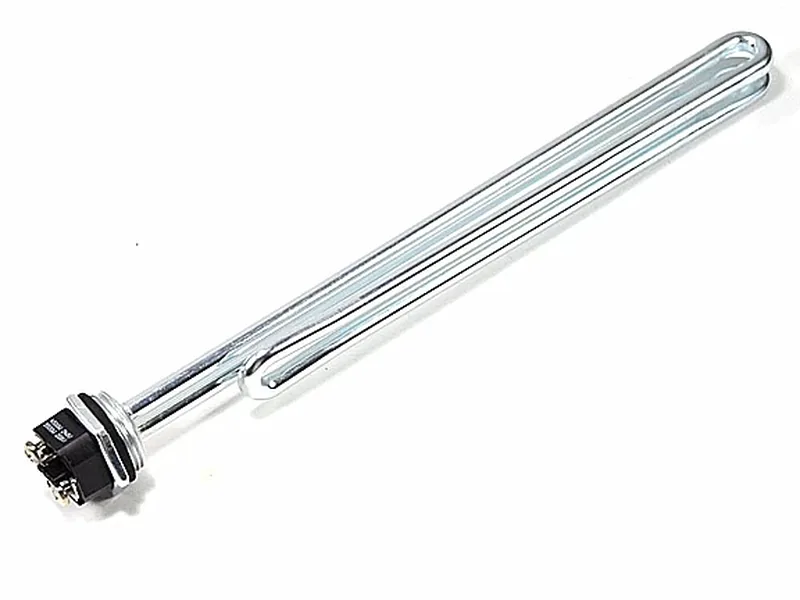
Your electric water heater has no burner, no pilot, no gas valve — just two heating elements and two thermostats doing all the work. When an element fails, the symptoms are distinctive once you know them: the hot water runs out suspiciously fast, or never gets hot at all, or the breaker keeps tripping. Here's how to read those signs, what causes element failure in Wheaton homes, and when the fix is a part versus a new heater.
How Electric Heater Elements Work (30-Second Version)
Most electric tanks have an upper and lower element. The upper element heats the top portion of the tank first (so you get some hot water quickly), then the lower element takes over to heat the full tank. The two never run simultaneously — thermostats sequence them. This design means each element's failure produces a different, diagnosable symptom.
Signs the Lower Element Has Failed
The lower element does most of the heating work, so its failure is the most common:
- Hot water runs out much faster than normal. The upper element heats only the top fraction of the tank; once that's used, cold water follows. A family that used to get three showers now gets one and a half.
- Water is lukewarm, never fully hot. The upper thermostat satisfies quickly on its small heated zone, and the lower never picks up the load.
- Longer recovery times between uses — the tank reheats at a fraction of its normal rate.
Signs the Upper Element Has Failed
- Little or no hot water at all. The upper element and thermostat control the initial heat-up; if the upper fails, the lower may never get the signal to run.
- Water starts hot then goes cold fast — a small hot layer with nothing behind it.
- Breaker tripping when the heater runs — a shorted element draws fault current. (A tripping breaker can also mean wiring issues; either way, it's electrician/technician territory, not a reset-the-breaker-and-hope situation.)
Why Elements Fail in Wheaton
The number-one killer here is sediment. Wheaton's moderately hard water bakes mineral scale directly onto the lower element, insulating it until it overheats and burns through — sometimes visibly split or blistered when removed. Other causes include dry-firing (power applied before the tank is full, instantly destroying elements — the classic post-installation mistake), old age (elements are wear parts with finite life), voltage problems, and failed thermostats that let an element run unchecked. A technician tests with a multimeter — continuity and resistance readings distinguish a dead element from a dead thermostat in minutes, which matters because the symptoms overlap heavily.
Element vs. Thermostat: Don't Guess
Lukewarm water and fast depletion can mean a bad element or a bad thermostat, and the parts cost and labor differ. Thermostats fail too — contacts weld, calibration drifts, reset buttons trip. The correct sequence is always test both, replace what's failed. Replacing elements on a guess while the thermostat is the problem (or vice versa) is how homeowners pay twice. Our heating element replacement service includes full electrical testing of elements and thermostats, so the diagnosis is certain before any part is ordered.
When Element Failure Means a Bigger Decision
An element swap is straightforward and economical on a mid-life tank. But apply clear-eyed math when:
- The tank is 10+ years old — elements dying of old age usually mean the tank, anode rod, and valves are all at end of life together.
- The removed element comes out caked in inches of scale — the tank bottom looks the same inside, and bottom failure may be next.
- The hot water is rusty or the tank rumbles — internal corrosion is advanced regardless of the electrical fault.
- Both elements and a thermostat need replacement on an old tank — stacked part costs approach replacement economics.
In these cases, our repair-or-replace framework usually points to replacement — and we'll say so plainly rather than selling you parts for a dying tank.
Preventing Early Element Death
Annual flushing is the big one — keeping sediment off the lower element is the difference between a 3-year element and a 10-year one in hard water. Keep the thermostat at 120°F rather than maxed out; extreme settings accelerate scale baking. And never restore power to a drained tank — if you've had the tank open for any reason, confirm it's completely full (run a hot tap until water flows steadily) before flipping the breaker. Dry-firing destroys new elements in under a minute.
Hot water running out too fast, or not getting hot at all? Call Water Heater Leak Repair Rescue at (833) 713-2101. We'll test the full electrical system, replace only what's actually failed, and tell you honestly how much life the tank has left.
What a Professional Element Service Includes
A proper element service visit is more than a part swap. Our technician starts with the power verified off and the tank partially drained, then tests both elements and both thermostats with a multimeter to identify every failed component — not just the obvious one. The tank gets a sediment assessment while open: if the bottom is buried in scale, we'll show you and discuss whether flushing recovery or replacement planning makes more sense. New elements are matched exactly to your unit's wattage and voltage, threads are sealed properly, the tank is fully refilled and purged of air before power is restored (no dry-firing, ever), and the system is run through a full heating cycle to verify recovery. You get the failed parts to see, an honest read on tank condition, and hot water that actually lasts. That's the difference between a parts-changer and a diagnostician — call (833) 713-2101 for the latter.
Gas dominates water heating in Wheaton, but electric tank heaters have their pockets: townhome and condo communities near downtown, some all-electric homes, and point-of-use units tucked under sinks or in additions where running a gas line never made sense. Electric heaters have no burner, no pilot, and no vent — just one or two immersion elements and thermostats doing all the work. When an element fails, the symptoms are specific enough to diagnose from the shower: the upper element failing means little or no hot water at all, while a failed lower element gives you a short burst of hot water that turns lukewarm fast, because only the top of the tank is being heated.
Wheaton's moderately hard Lake Michigan water is the usual killer. Scale coats the elements, and a scaled element can't shed heat into the water efficiently — it overheats in its mineral jacket until the internal filament burns through. The reset button (the ECO, or energy cut-off) tripping repeatedly is the companion symptom: it means the thermostat area is overheating, often because sediment has buried the lower element and thermostat in an insulating layer. Frequent resets are the heater asking for help, not a button to keep pushing.
Testing and Replacing Elements Safely
Element work starts at the breaker panel, not the heater: kill the double-pole breaker, then verify with a non-contact tester that both legs are dead, because 240 volts is unforgiving. With power confirmed off, a multimeter continuity check across each element's terminals tells the story — no continuity means a burned-out element. The tank must be drained below the element being replaced, and the old element's wattage and voltage must be matched exactly; a 4500-watt element where a 3500-watt belongs will trip breakers and overheat wiring.
On heaters past about 8 years, replace thermostats and both elements as a set rather than chasing single failures — if one component has lived its life on Wheaton water, the others are close behind. And always pair element replacement with a full sediment flush, since the scale that killed the element is still sitting on the tank bottom waiting to kill its replacement. If the tank is over 10 years old and you're replacing the second failed element, that's the moment to price a new heater instead of feeding parts to an aging tank.