Gas Water Heater Pilot Light Won't Stay Lit
Published 2026-10-10
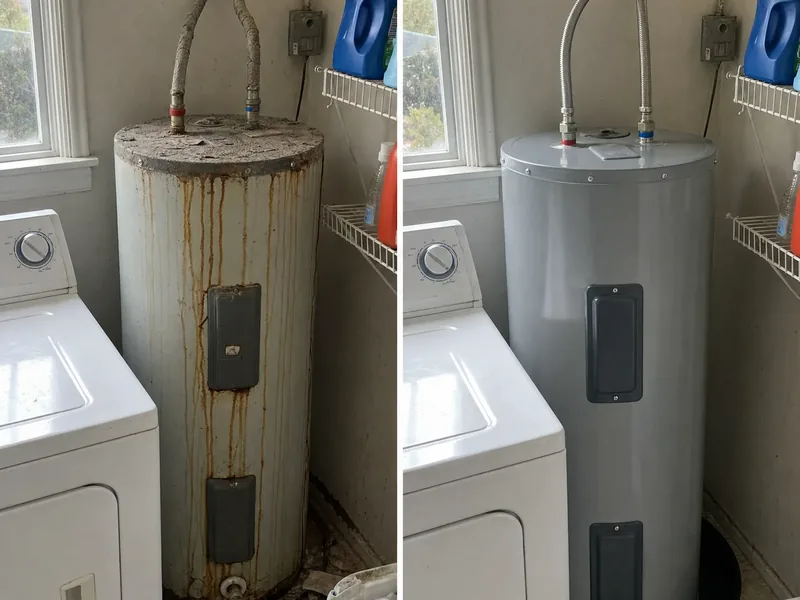
You hold the button, the pilot lights, you wait the prescribed minute — and the moment you release, the flame dies. Or it stays lit for a day and then mysteriously goes out. A pilot light that won't stay lit is one of the most common gas water heater complaints in Wheaton, and the good news is that the cause is usually a small, inexpensive part. The bad news is that guessing wrong wastes money. Here's the diagnostic order that gets it right.
How the Pilot System Works
The pilot is a small flame that burns continuously, ready to ignite the main burner on demand. A thermocouple (or thermopile on some units) sits in the pilot flame and generates a tiny electrical current from the heat. That current holds the gas valve open. No flame → no current → valve snaps shut → gas stops. It's an elegant safety loop — and every "won't stay lit" problem is a break somewhere in that loop.
Cause #1: Failed Thermocouple (Most Common)
Thermocouples weaken with age and heat exposure. A weak one generates some current — enough to hold the valve while you're pressing the button (which mechanically overrides it), but not enough once you release. Classic symptom: pilot lights fine, dies the instant you let go. Replacement is inexpensive and quick, and it's the first part to suspect on any pilot that won't hold. If your heater is over 7–8 years old and the thermocouple is original, this is the odds-on favorite.
Cause #2: Dirty or Clogged Pilot Orifice
The pilot orifice is a tiny opening that meters gas to the pilot flame. Dust, rust flakes, and spider webs (yes, really — spiders love pilot assemblies) partially block it, producing a weak, small, or yellow flame that doesn't properly engulf the thermocouple. Symptom: a pilot flame that looks anemic compared to the crisp blue cone it should be, or one that lifts off the thermocouple. Cleaning the orifice — carefully, with the gas off — often restores a healthy flame. This is especially common in Wheaton basements after summer, when the heater sat idle and dust settled.
Cause #3: Draft Problems Blowing Out the Flame
The pilot flame is delicate. Downdrafts in the flue, a missing or damaged draft hood, nearby dryer or furnace competing for combustion air, or even a basement window creating a cross-breeze can snuff or destabilize it. Symptom: pilot stays lit for hours or days, then goes out — often on windy days. Check that the draft hood is seated properly, the vent is unobstructed, and the area has adequate combustion air. Persistent draft issues need professional venting assessment — they're also a carbon monoxide concern.
Cause #4: Faulty Gas Control Valve
If the thermocouple is new, the pilot flame is strong and blue, drafts are ruled out — and the pilot still won't hold — the gas control valve's pilot circuit has failed internally. This is less common than thermocouple failure but absolutely happens, especially on older valves. Our gas control valve guide covers the full symptom picture; valve replacement is the fix, with the exact-match part for your model.
Cause #5: Gas Supply Issues
Low gas pressure, a partially closed shutoff valve, or a kinked flexible connector can starve the pilot. If other gas appliances are also acting up, suspect supply rather than the heater. And verify the heater's gas shutoff is fully open — quarter-turn valves should have the handle parallel to the pipe.
What You Can Safely Do vs. What Needs a Pro
Safe for homeowners: relighting per the label instructions, holding the button the full recommended time (impatience causes half of all "failures"), checking that the gas shutoff is open, and visually inspecting for obvious drafts or a displaced draft hood.
Call a professional for: thermocouple replacement (simple but gas-adjacent), pilot orifice cleaning if you're not comfortable, any gas smell at any time, repeated failures after relighting, or any disassembly of the gas control valve. Gas work rewards humility — there's no DIY prize worth a gas incident.
When Pilot Problems Signal a Bigger Issue
A pilot that won't stay lit on a 14-year-old tank with rusty water isn't really a pilot problem — it's an old heater announcing retirement. Apply the repair-or-replace logic: a thermocouple on a healthy mid-life tank is smart money; chasing pilot issues on a tank that's already leaking or corroded is throwing good money after bad. We'll assess the whole unit when we come for the pilot, so you get the full picture, not just a relight.
Pilot giving you trouble? Call Water Heater Leak Repair Rescue at (833) 713-2101. We'll diagnose the full pilot-to-burner chain — thermocouple, orifice, draft, valve — and fix the actual cause, not just the symptom.
Pilot Problems After Flooding or Leaks
There's a special case Wheaton homeowners should know: pilot assemblies that get wet from a tank leak or basement flooding rarely recover fully. Water corrodes the thermocouple connection, fouls the pilot orifice with mineral deposits as it dries, and can damage the gas control valve's pilot circuit. If your pilot troubles started right after a leak event — even a "minor" one — say so when you call, because the diagnosis changes: we're looking at water damage to the gas controls, not just a worn thermocouple. Depending on severity, this can mean cleaning and part replacement, or it can mean the gas controls are compromised enough that replacement is the safe call. Never relight a pilot on a gas unit that took on water until a professional has inspected the burner compartment — call (833) 713-2101 first.
Wheaton's housing stock keeps pilot-light know-how relevant: the Cape Cods, bungalows, and early colonials near downtown and in the older north-side neighborhoods often run heaters old enough to have standing pilots rather than electronic ignition. A healthy pilot is a small, steady blue flame enveloping the thermocouple tip. When it starts going out — after a gust from a basement window, after the laundry dryer kicks on nearby, or for no reason anyone can see — the usual suspects are a worn thermocouple, a dirty pilot orifice, or a draft problem in the heater's corner of the basement.
Basement dust is the underrated villain. Water heaters tucked into utility corners near furnaces, washers, and dryers breathe lint and dust for years, and the tiny pilot orifice clogs gradually until the flame shrinks, lifts off the thermocouple, and drops out. The relight procedure is standard — gas to pilot, hold the button, ignite, keep holding for a full minute so the thermocouple heats — but if you're relighting weekly, cleaning or replacement is overdue, not optional.
Beyond the Pilot: Gas Controls and Wheaton Safety Basics
A pilot that won't stay lit even with a fresh thermocouple points deeper, to the gas control valve itself — and that's a replacement part, not an adjustment. Newer FVIR (flammable vapor ignition resistant) heaters add another wrinkle: their sealed combustion chambers and flame-arrestor screens clog with dust more readily than the old open designs, and a choked arrestor starves the burner of air until the whole unit underperforms or shuts down. Annual vacuuming of the air intake area prevents most of it.
Two safety rules are non-negotiable. First, never attempt pilot work if you smell gas — the rotten-egg odorant means fuel is escaping somewhere it shouldn't, and the correct move is to leave the house and call Nicor's emergency line from outside, not to strike a match. Second, keep working carbon monoxide alarms on every level, which Illinois law requires anyway; a misbehaving gas burner is exactly the scenario those alarms exist for. Pilot trouble is usually a minor repair, but gas always deserves respect.