Documenting a Water Heater Leak for Insurance in Wheaton, IL
Published 2026-10-12
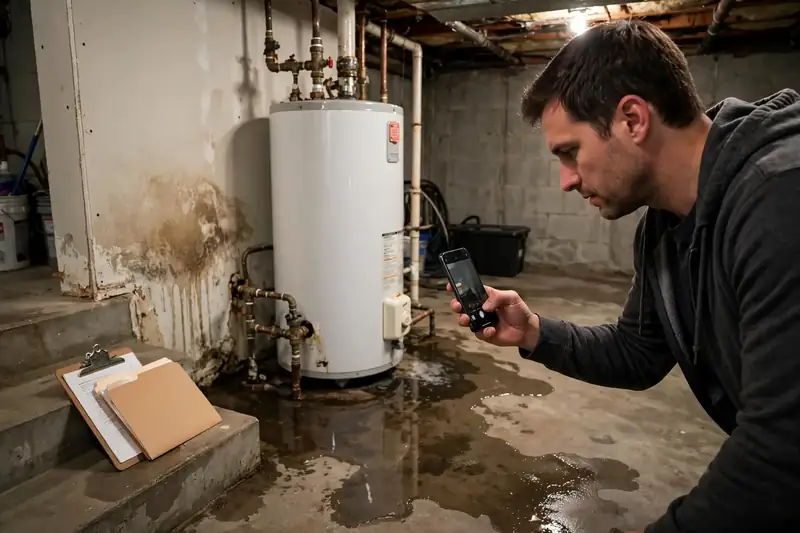
You come downstairs to find water spreading across the basement floor from your water heater. The plumber is on the way — but before the panic fades, a second thought should follow: this may become an insurance claim, and everything you do in the next few hours will shape how that claim goes. In Wheaton, Illinois, most homeowners policies cover sudden water heater failures, but insurers deny a surprising number of these claims for reasons that have nothing to do with the leak itself: poor documentation, delayed mitigation, or missing maintenance records. This guide walks you through exactly how to document a water heater leak so your claim has the best possible chance.
Why Documentation Decides Your Claim
Insurance adjusters weren't there when your water heater failed. Everything they know about your loss comes from what you show them. Two homeowners with identical leaks can get very different outcomes: one hands the adjuster dated photos, a plumber's written cause-of-loss report, receipts for every expense, and maintenance records — and gets paid. The other says "it was leaking when I found it" with no evidence — and gets questioned, delayed, or denied. In Illinois, the burden is effectively on you to prove the loss was sudden, accidental, and covered. Documentation is how you do that.
This matters even more for water heater claims than for most water losses because of one uncomfortable fact: water heaters fail from age and corrosion, and policies exclude wear and tear. Your documentation has to draw a bright line between the covered event (the sudden failure and resulting water damage) and the excluded cause (the aging tank). That's a line you draw with evidence, not arguments.
Know What Your Policy Actually Covers
Most Wheaton homeowners carry an HO-3 policy, which typically covers sudden and accidental water damage — a tank that ruptures, a supply line that bursts, a fitting that fails without warning. What's usually covered: the resulting damage to your home (flooring, drywall, baseboards, personal property) and sometimes the cost to access the repair. What typically is NOT covered:
- The water heater itself. The failed appliance is generally considered wear and tear. You'll usually pay for the new heater out of pocket (though some policies cover the cost to tear out and access the unit).
- Gradual damage. A fitting that seeped for months before you noticed is the classic denial. Insurers call this "long-term leakage" or "seepage," and it's excluded under most policies.
- Neglect. If the heater was decades past its expected life with zero maintenance, some insurers argue the failure was foreseeable.
- Mold beyond limits. Many Illinois policies cap mold remediation at $5,000–$10,000 or exclude it unless caused by a covered loss.
The sudden-vs-gradual distinction is where most water heater claims live or die. If your photos show a clean failure — a burst seam, a split line, a puddle with no staining — you're in good shape. If they show months of rust staining, mineral deposits, and rotted baseboards, the adjuster will argue the leak was gradual and known. This is why documenting quickly, before cleanup erases the evidence, is critical.
The First Hour: Safety, Shutoff, and Mitigation
Before you touch a camera, do the urgent things — and note that Illinois policies include a "duty after loss" requiring you to protect the property from further damage. Fail to mitigate, and the insurer can reduce your payout for the additional damage.
- Stay safe. Don't stand in water near an electric water heater — switch off the breaker from a dry location. For gas, turn the gas control off. If water is near electrical panels or outlets, be cautious.
- Shut off the water. Close the cold-water supply valve to the heater, or the main house shutoff. Note the time.
- Call a plumber. Emergency water heater service stops the loss. Keep the invoice — it's part of your claim file. Our emergency water heater leak repair team documents the cause of loss in writing, which adjusters want to see.
- Begin mitigation immediately. Move valuables, extract standing water, remove wet porous materials you can't dry, and get air moving with fans and a dehumidifier. Take photos BEFORE you move things, then keep mitigating.
Do not wait for the adjuster before mitigating. Insurers expect you to act promptly; waiting days for an inspection while water sits is exactly the kind of thing that gets the later mold damage denied.
Photograph and Video Everything — the Right Way
Your phone is your best claims tool. Here's how to use it:
- Start wide, then go close. Film a slow walkthrough video of the whole affected area first, narrating what you see ("This is the basement utility room, water coming from the base of the water heater, spreading toward the finished area"). Then take close-ups of the failure point: the split seam, the failed fitting, the corroded valve.
- Capture the source clearly. The single most important shot is the leak's origin. Wipe the area if needed and photograph where water is actually coming from — tank body, supply line, drain valve, T&P valve. If it's safe, keep a short video of water actively leaking.
- Show the spread. Photograph water lines on drywall, soaked carpet edges, warped flooring, and the full extent of the wet area. Include a ruler or tape measure in frame for scale.
- Photograph the water heater's data plate. Model number, serial number, and manufacture date establish the unit's age. An adjuster will ask; having it in the first photo set looks professional.
- Document damaged contents. Every damaged item: boxes of stored belongings, furniture, electronics, rugs. Photograph each, note brand and approximate value, and don't throw anything away until the adjuster has seen it or you've photographed it thoroughly.
- Keep timestamps on. Make sure your phone's date/time stamp is enabled. Metadata showing photos taken within hours of discovery is powerful evidence of a sudden event.
- Photograph your mitigation. Fans running, dehumidifier in place, extracted water. This proves you fulfilled your duty after loss.
Build the Paper Trail
Photos are half the file. The other half is paper:
- Plumber's written report. Ask your technician for a written cause-of-loss statement: what failed, why (as best as can be determined), and that the failure appeared sudden. Our technicians provide this routinely for insurance purposes.
- All invoices and receipts. Emergency service, replacement heater, cleanup supplies, hotel if the home was uninhabitable, meals if displaced. Keep everything.
- Maintenance records. If you've had the heater serviced — annual flushes, anode rod replacement, T&P valve tests — gather those receipts. They rebut any "neglect" argument. Our maintenance checklist shows what a well-kept service history looks like.
- Purchase records for the heater. Receipt or installer invoice showing when the unit was installed. A 6-year-old failed heater reads very differently from a 20-year-old one.
- A claim log. From the first call, log every interaction with your insurer: date, time, who you spoke with, what was said. Email confirmations of phone conversations are even better.
- An inventory of damaged property. Room by room: item, age, approximate value, photo reference. For significant contents losses, this list drives the personal-property portion of your settlement.
Filing the Claim: Step by Step
- Call your insurer promptly — most policies require prompt notice. Give the basic facts: date of discovery, what failed, what was damaged, what you've done to mitigate.
- Get a claim number and the adjuster's name and contact information. Write it down.
- Submit your documentation package — photos, video, plumber's report, receipts, maintenance records, inventory. Organized files get faster, better responses than a jumbled email thread.
- Prepare for the adjuster visit. Don't clean up the failure point before they see it (mitigate around it, but leave the evidence). Have your documentation ready and walk them through the timeline.
- Get your own repair estimates in writing. If the adjuster's estimate seems low, written contractor estimates are your leverage. We provide detailed written estimates for all water heater replacement work.
- Review the settlement carefully before accepting — check the deductible, depreciation applied to contents, and whether all damaged areas are included.
Illinois-Specific Points Worth Knowing
A few things specific to filing in Illinois:
- The Illinois Department of Insurance regulates claim handling. If your insurer is unreasonably delaying or denying, you can file a complaint with the Department — insurers take these seriously.
- Check your policy's appraisal clause. Most Illinois homeowners policies include an appraisal provision: if you disagree on the amount of loss, each side picks an appraiser and they resolve it. It's a powerful tool when an adjuster's number is far below your documented costs.
- Public adjusters are regulated in Illinois and can represent you for a percentage of the settlement. For large or disputed claims, they're worth considering — but vet them carefully and understand the fee.
- Keep Illinois' weather in mind. If your leak happened during a freeze event (see our winter frozen pipe guide), document that the home was heated — insurers sometimes probe whether the house was kept at a reasonable temperature.
When Claims Get Denied — and What to Do
Common denial reasons for water heater leaks: long-term seepage exclusion, wear and tear, failure to mitigate, or the unit's age. If you're denied:
- Ask for the denial in writing, citing the specific policy language.
- Read that language yourself — adjusters sometimes stretch exclusions beyond what the policy actually says.
- Submit a rebuttal with your evidence: timestamped photos showing a sudden failure, the plumber's cause-of-loss report, maintenance records.
- Use the appraisal clause if the dispute is about the amount.
- File a complaint with the Illinois Department of Insurance if the handling seems unfair.
- Consider a consultation with an insurance attorney for large losses — many offer free initial reviews.
And remember the supplemental claim: damage often reveals itself after the initial settlement — a musty smell in the wall cavity, flooring that buckles weeks later. Most policies allow supplemental claims for newly discovered damage from the same event. Keep documenting even after the check arrives.
A water heater leak is stressful enough without fighting your insurer over it. Document early, document thoroughly, mitigate fast, and get professional cause-of-loss documentation. If you're dealing with a leak in Wheaton right now, call Water Heater Leak Repair Rescue at (833) 713-2101 — we'll stop the damage, document the cause in writing for your claim, and get your hot water back.